“When I met Death”
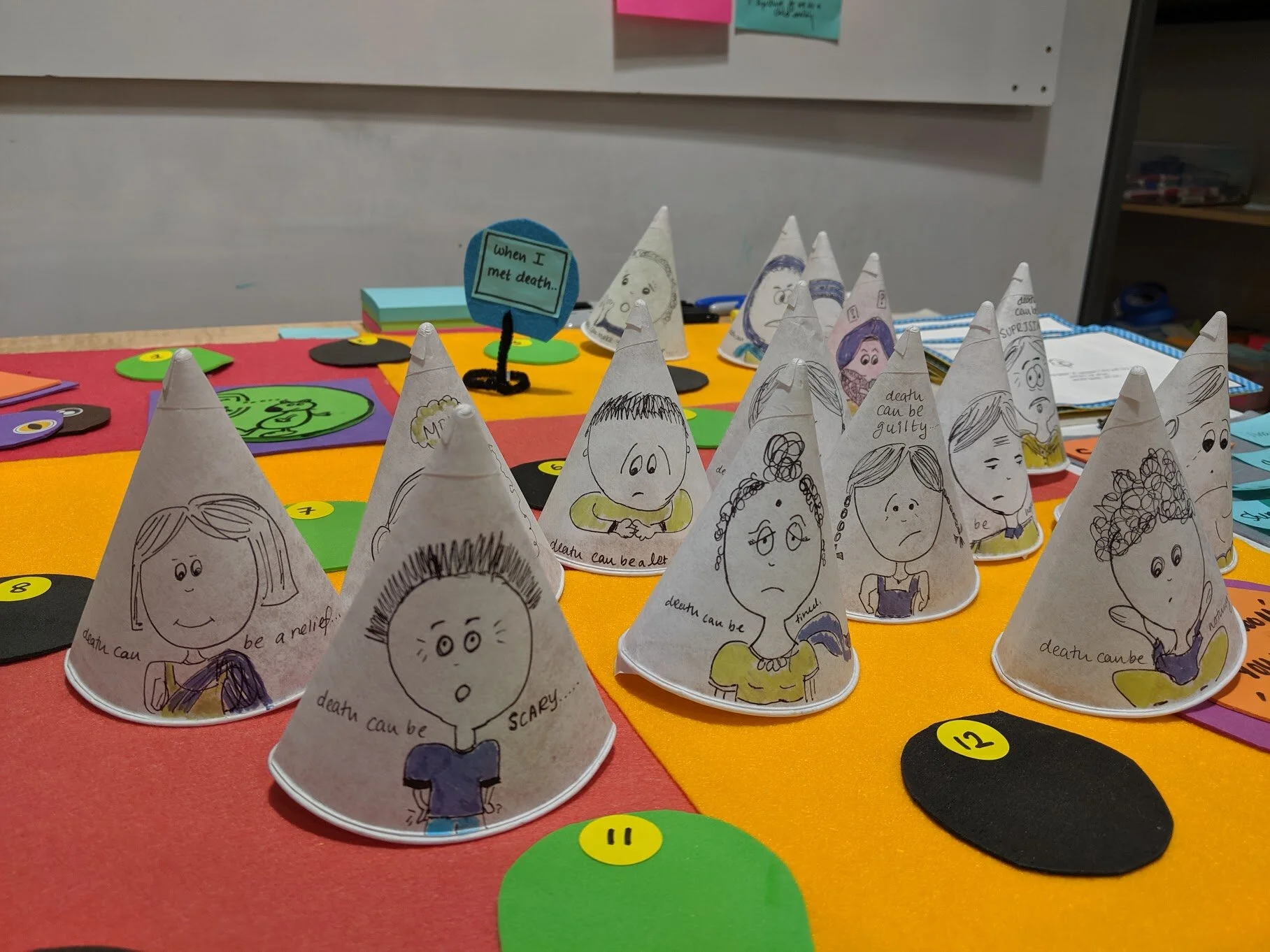
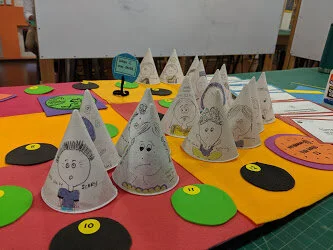
‘When I met death’ is an interactive board game of candid conversations about death for kids (and adults alike) Our North Star was to find ways of personifying death and making it easier and less morbid to talk about one of live’s internal truths: Death. This game was created as a part of Stanford D.school’s Design Thinking Studio.
Team
Wenjia: PhD Program, Operations, Information & Technology
Kavindya: Learning, Design and Technology
Project Duration: 2 weeks
Skills
Game Design
Low-fidelity Prototyping
User Research: Structuring need-finding and synthesis, game-testing and designing effective feedback mechanisms
Problem Scope
The high level topic for the first design challenge was life transitions. Life transitions were defined as changes in one’s circumstances that may cause us to re-evaluate our actions and often times our identities. Our team picked ‘end-of-life’ as the life transition was wanted to design for. The prompt was rather bold and open-ended: create an artifact that sparks conversations, new ways of thinking and new ways to take action.
Need-finding and Synthesis
We conducted a total of four user interviews with individuals who have either dealt with the death of a loved one or work in the space of supporting those who are dealing with grief. We interviewed two individuals who had dealt with the passing of a loved one due to cancer (one of them was a cancer patient themselves) and two others who work in the counselling and psycho-social support space.
Key Takeaways
Lack of a vocabulary to understand and talk about death: “why did death choose me?”
Death is considered to be taboo and inappropriate for everyday conversations. It’s almost like an enigma: “We put off discussing death all the time and when it comes by, we don’t know how to talk about it”
Classrooms are powerful spaces where empathetic conversations around death can begin and a good starting point to shift the perceptions children have about death: “Children can understand death differently, if we give them a chance”
How might we find ways of personifying death and making it easier and less morbid to talk about one of live’s internal truth: Death?
Prototyping
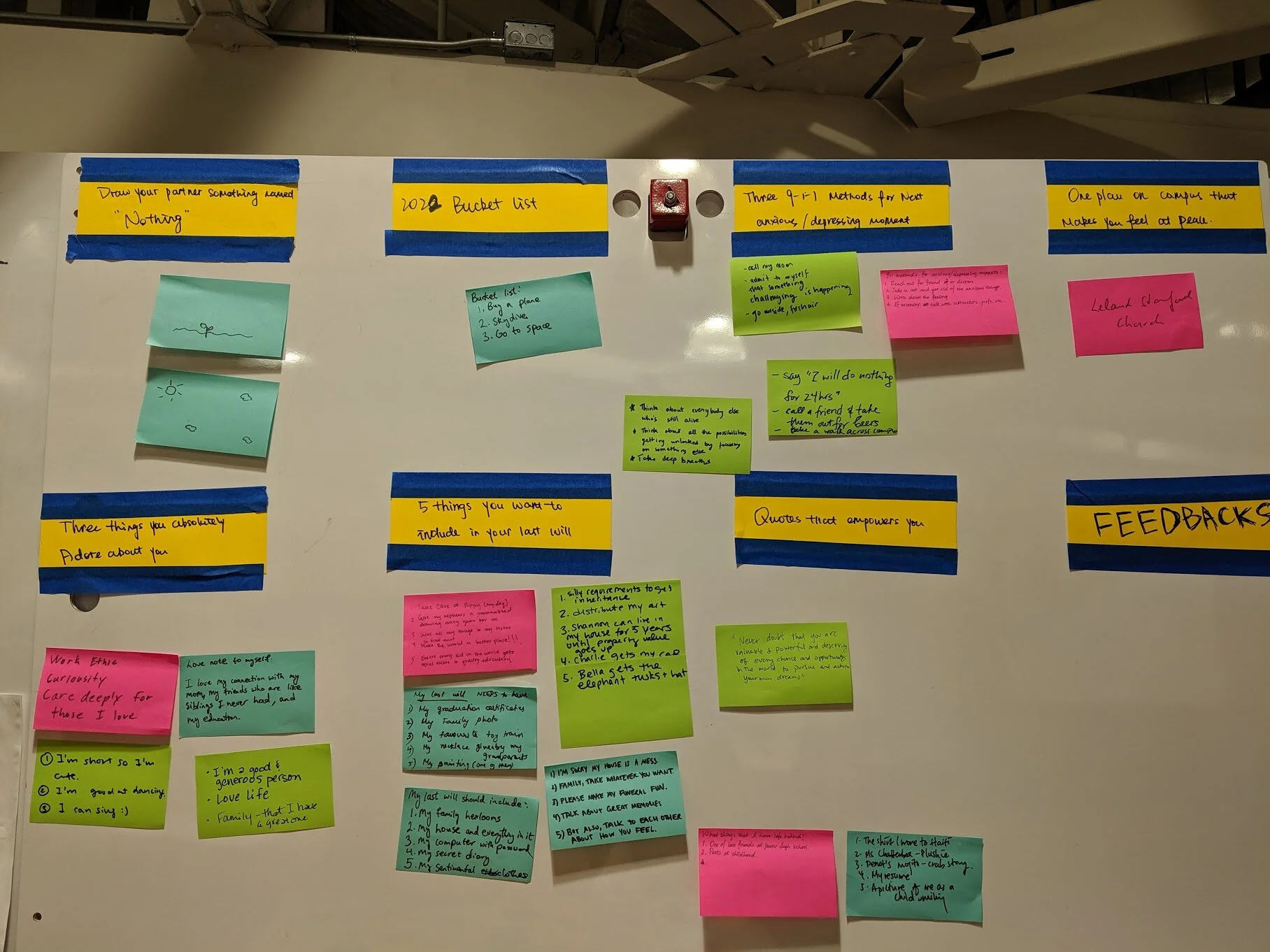
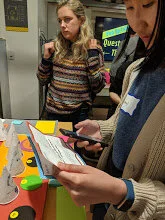
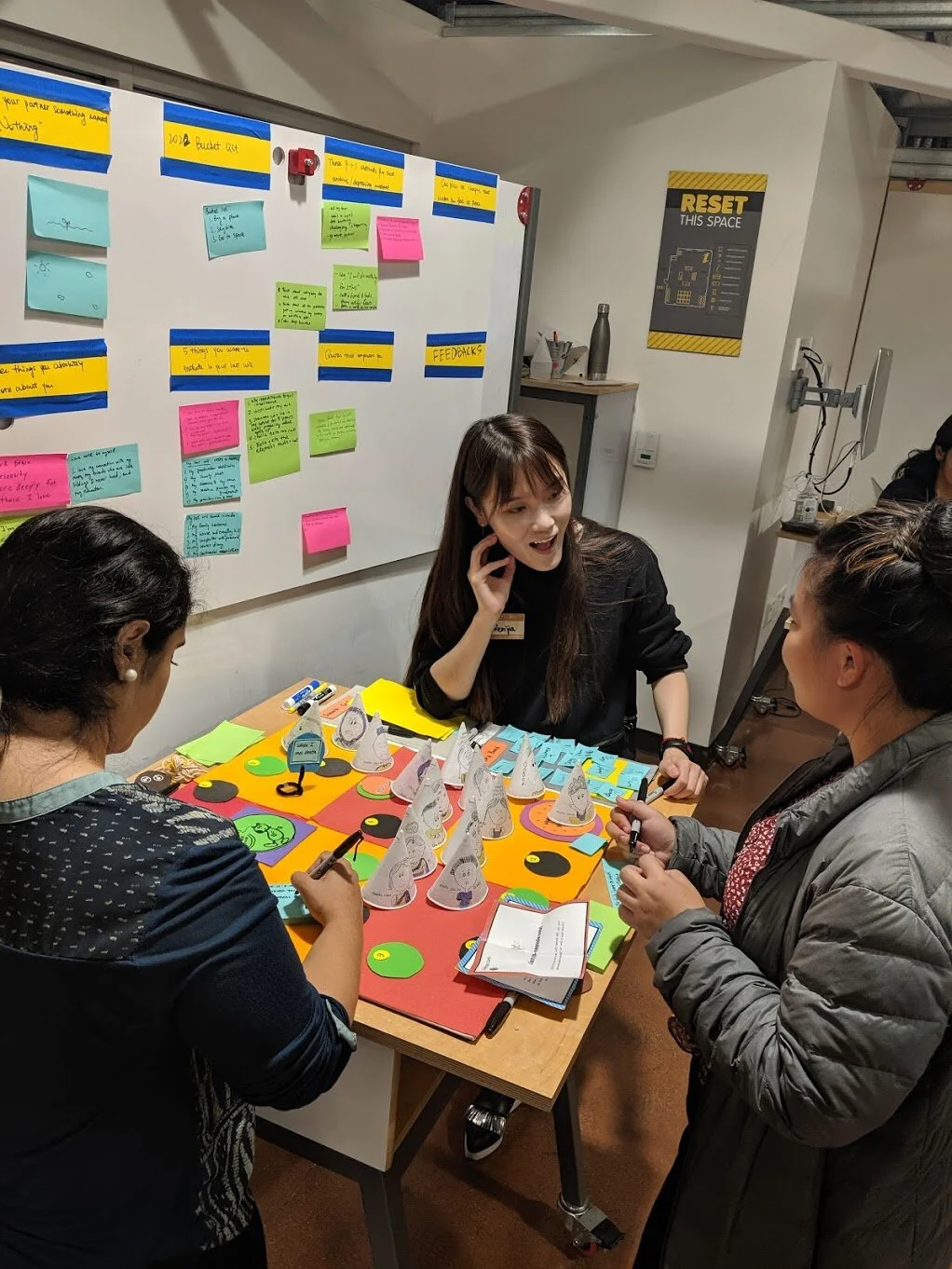
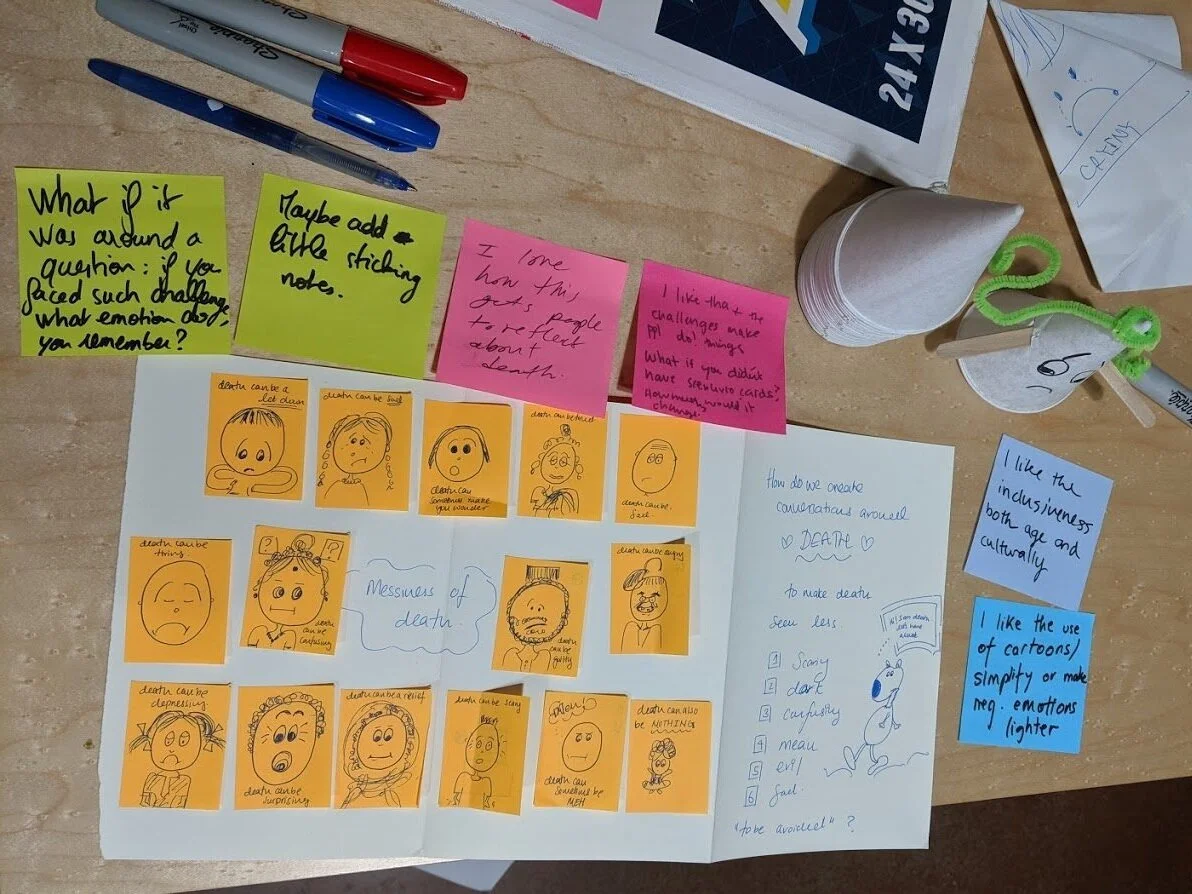
Given our 2 week design cycle we built a few paper prototypes of the game and tested one with our class and asked for feedback.
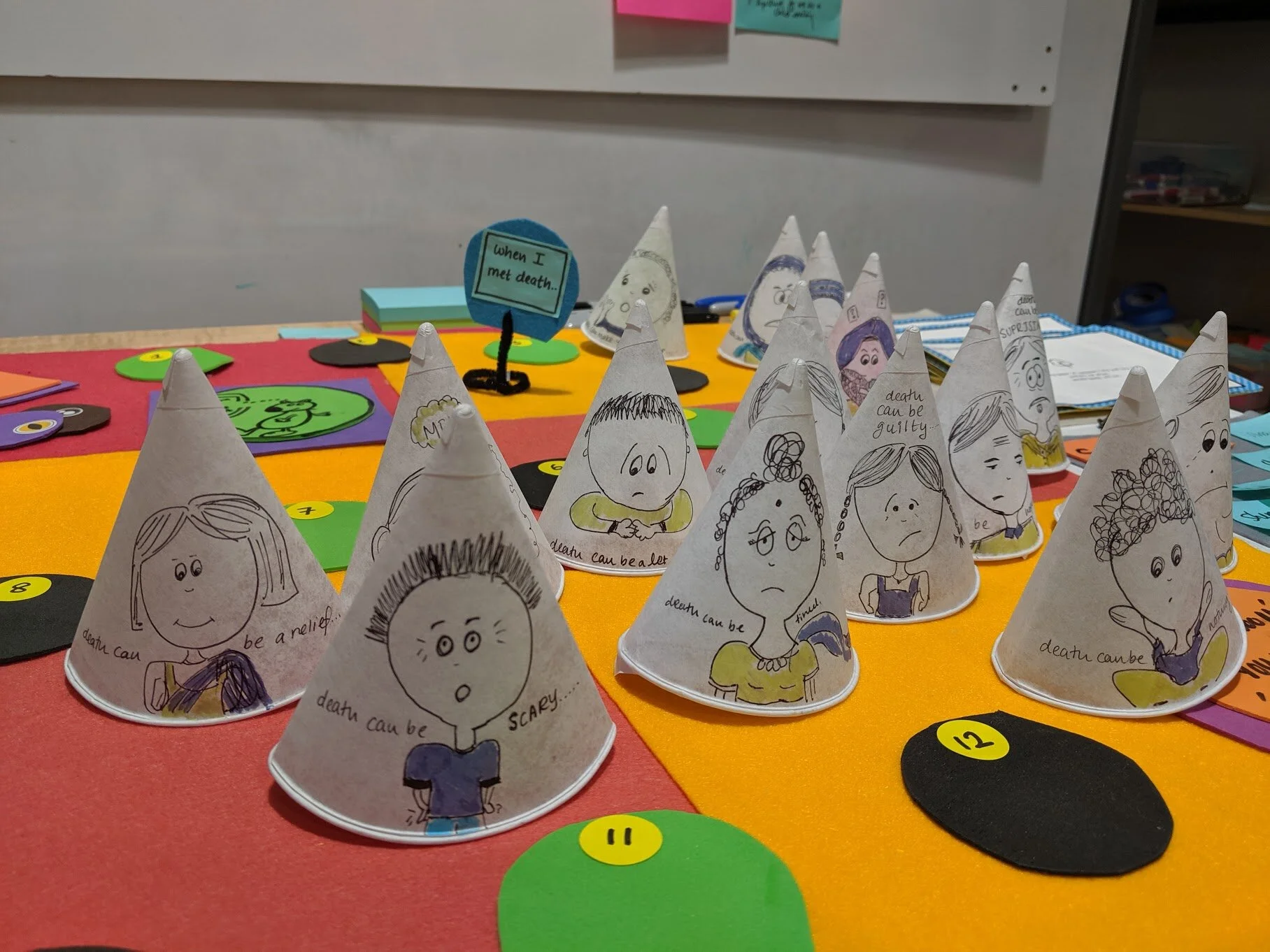
This prototype included a series of cartoons where we attempted to personify death: Death can be - tiring, surprising, sad, confusing, a let down etc. We were inspired by the children’s book Cry, Heart, But Never Break by Glenn Ringtved and Charlotte Pardi which provided such a beautiful meditation on death, by humanizing it.
Feedback: At this point we hadn’t figured out the exact game design framework or the interactions. The feedback we got pointed towards the need to have more interactive elements and to integrate ways of helping users gather mindsets and resources to help them make sense of death.
Final Product
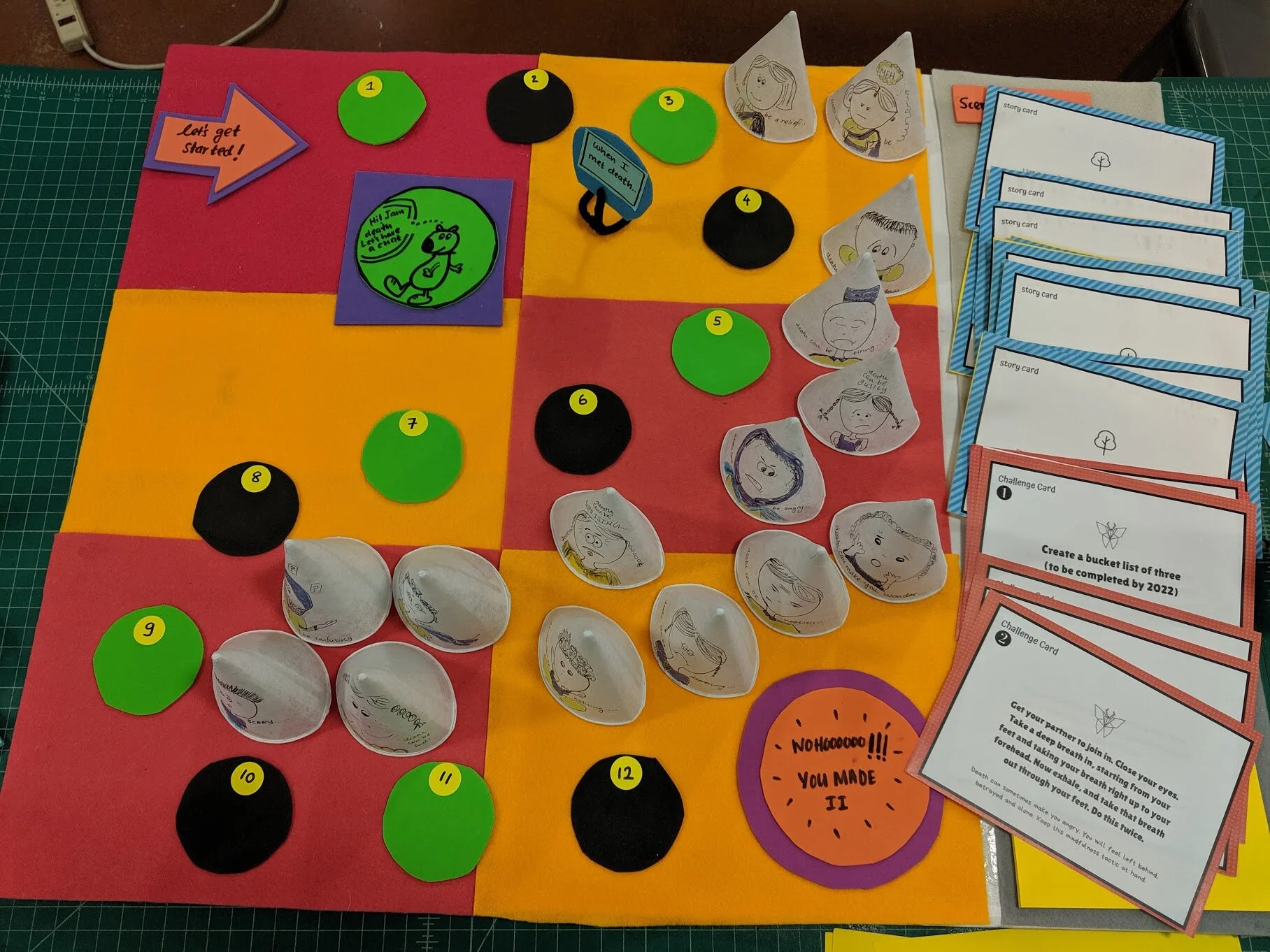
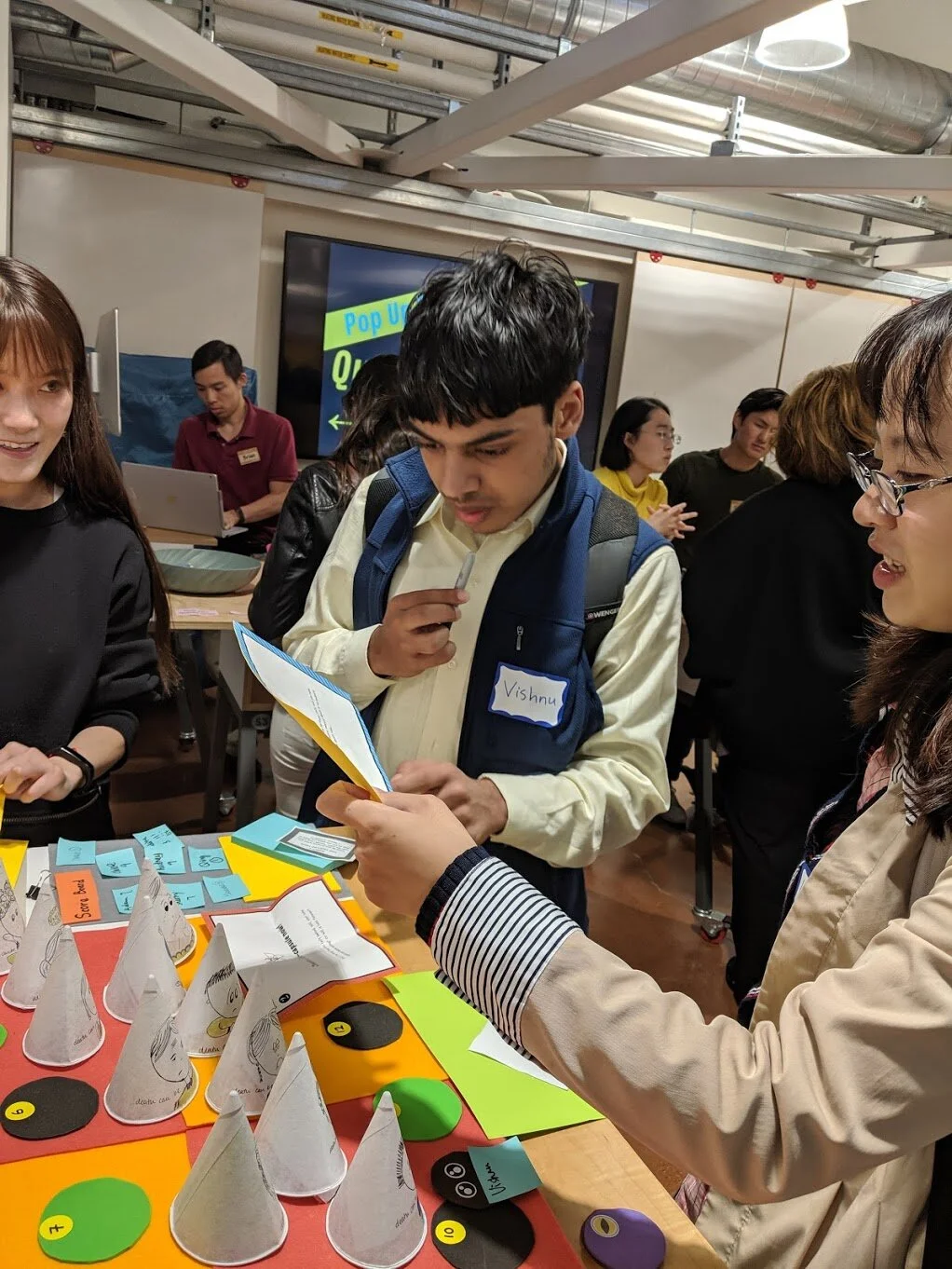
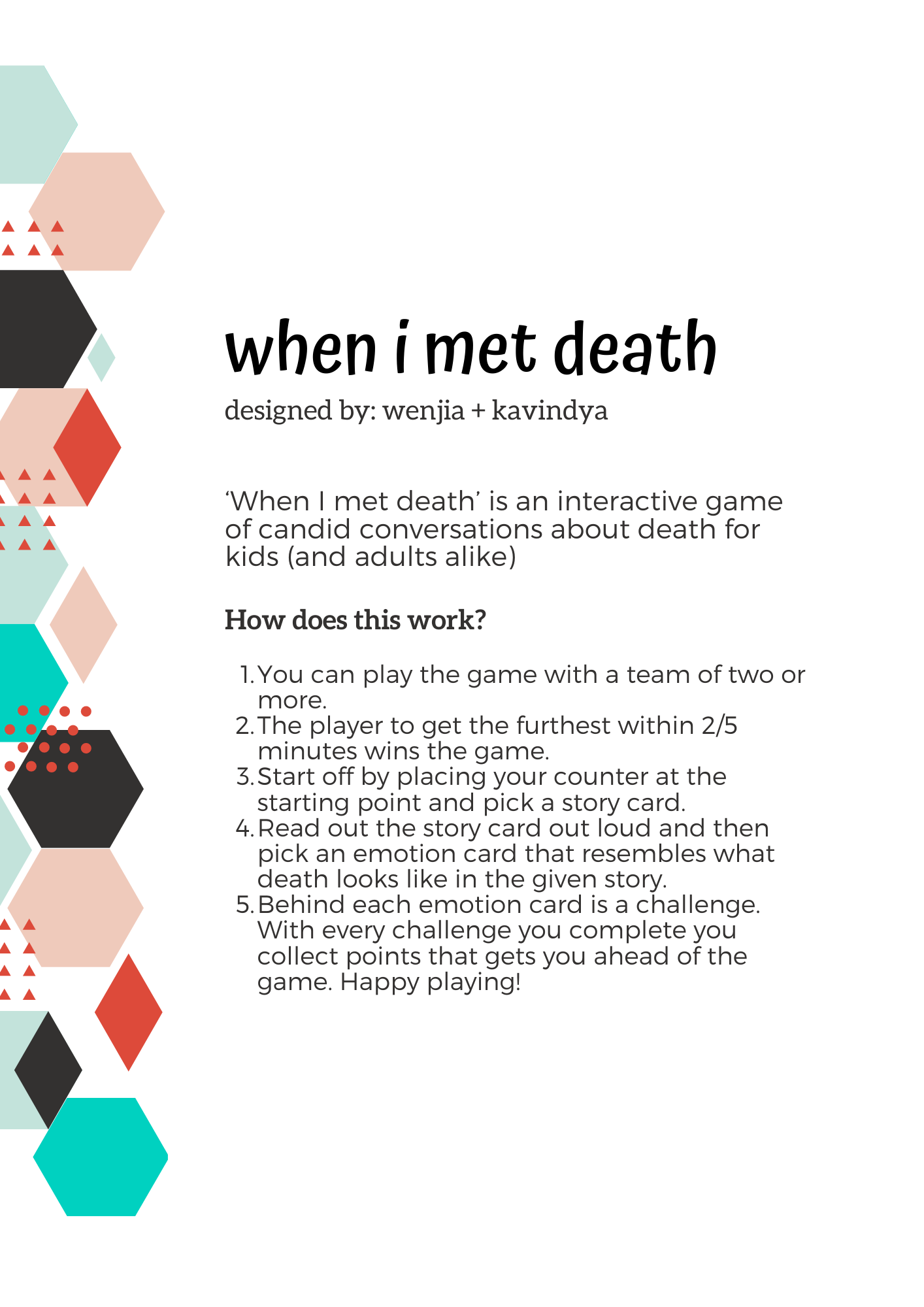
‘When I met death’ was our final iteration built in the form of an interactive board game to spark candid conversations about death for kids (and adults alike) We gathered inspiration from our three insights from the need-finding process to focus our attention on developing a tool that will spark conversation and make ‘Death’ more acceptable as a dinner table conversation topic.
People can play alongside one or two other players and you compete to get to the end of the 10 step journey.
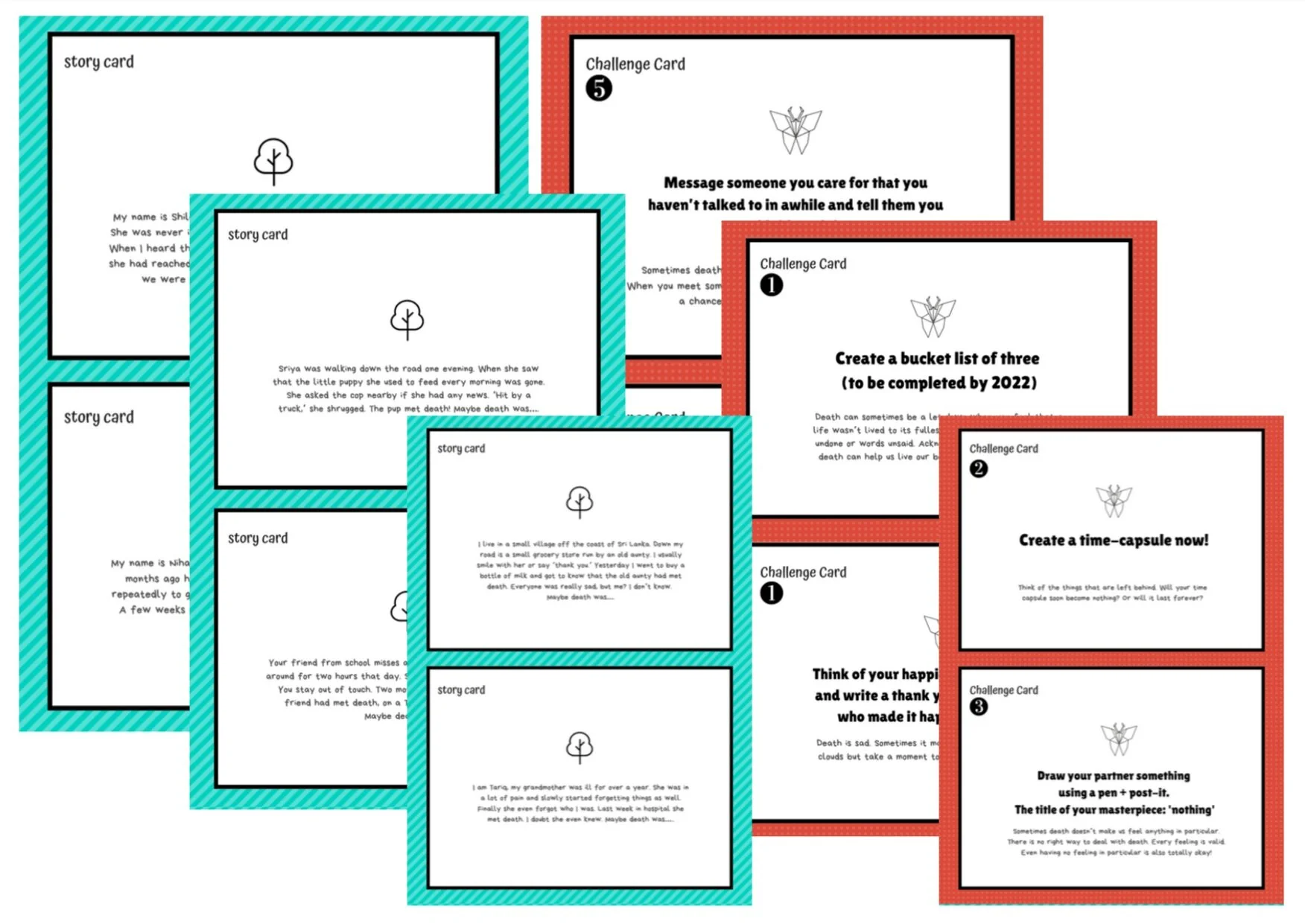
The game has three portions:
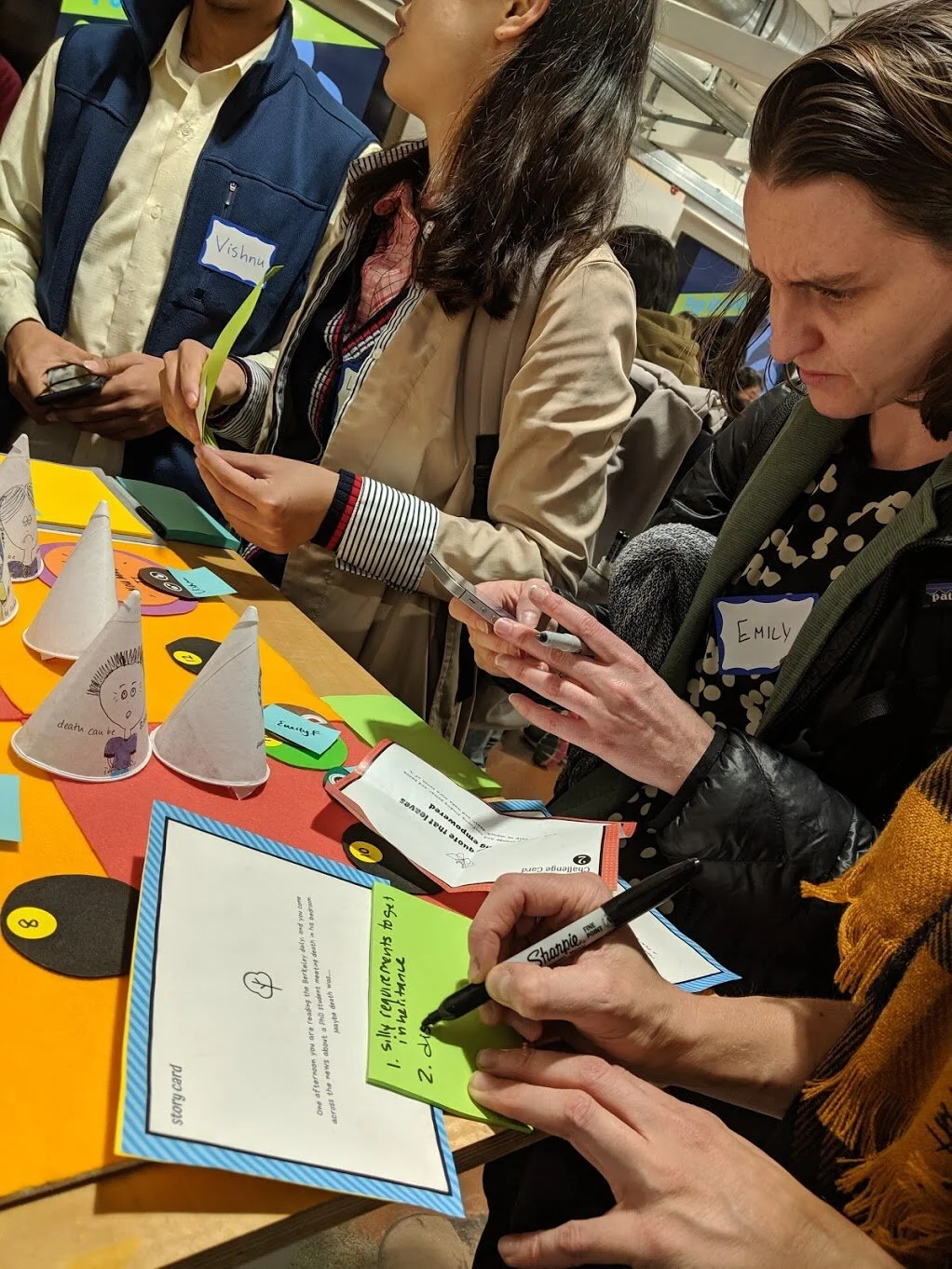
Story-cards: as you progress through the journey you get to pick a story-card at each step of the game. The story cards help guide the entire experience.
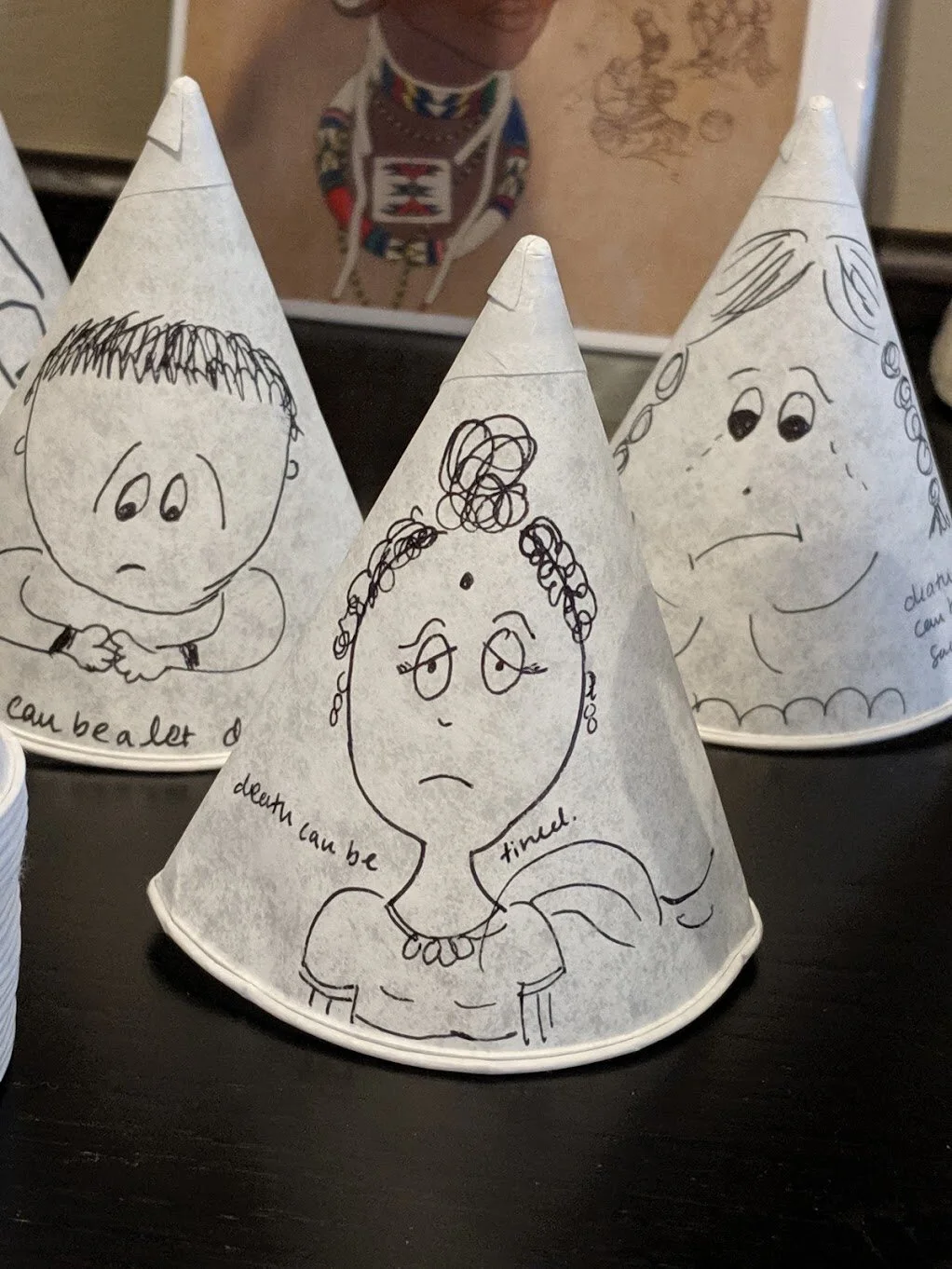
Emotion cone: each cone has a different personification of death. The user reads the story-card and then selects the emotion cone that corresponds best with the story. We attempted to make the emotion cones more ethnically diverse, since most storybooks on this topic featured white character.s
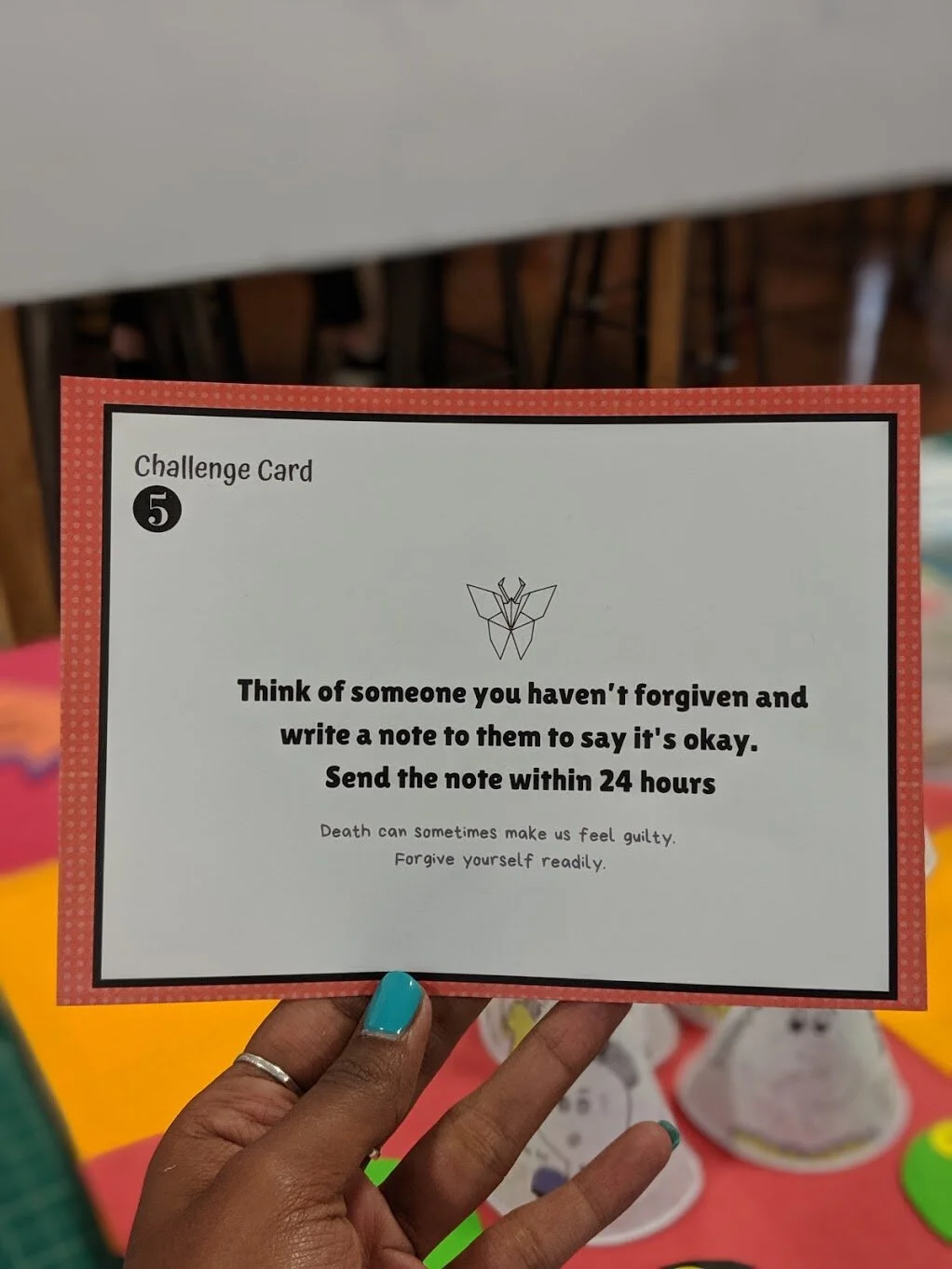
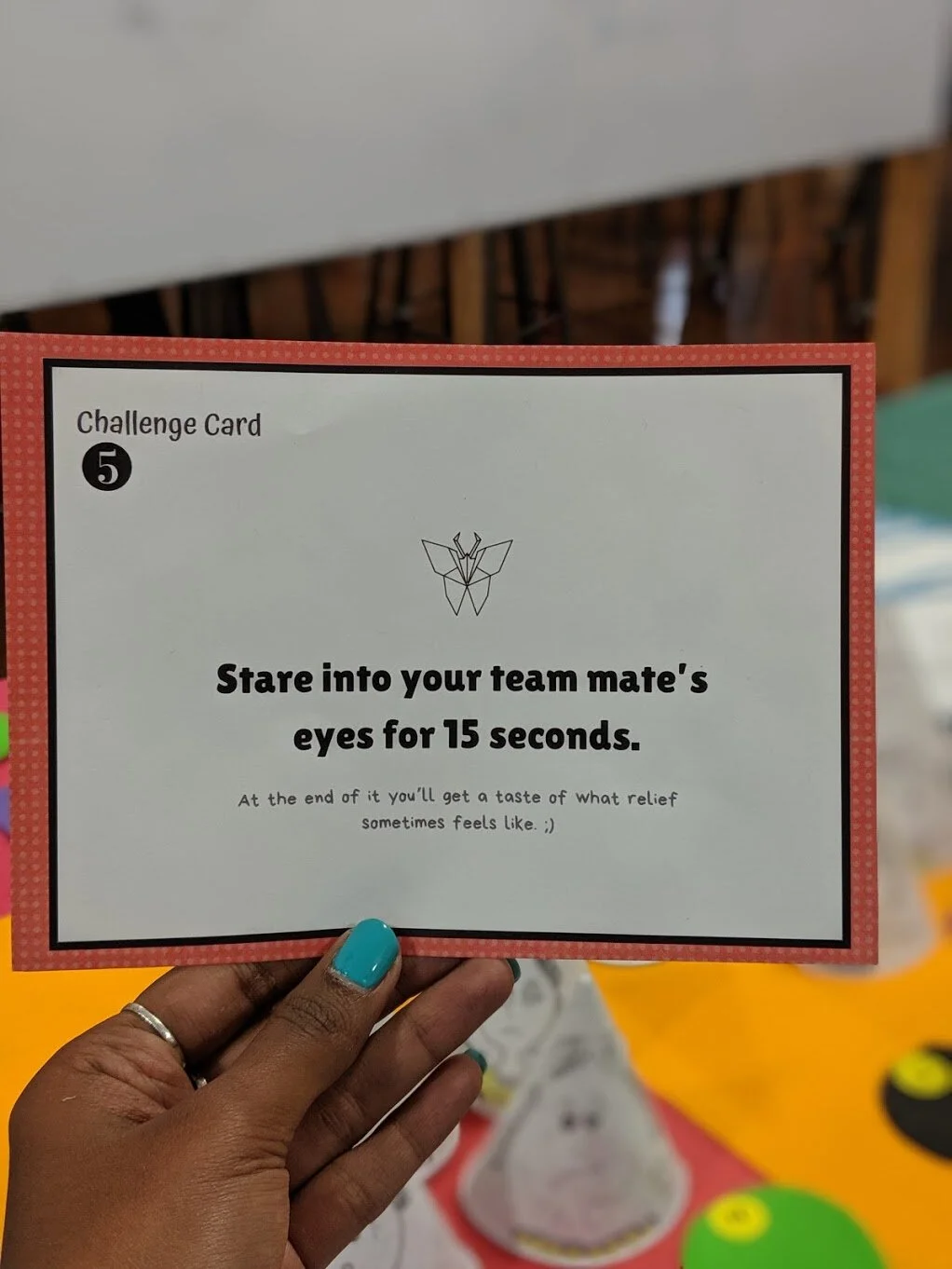
Challenge card: within each emotion card is a challenge card. The final step of each level is to finish the challenge. These challenges include prompts that spark conversations around death such as 'Tell me two things that you will include in your will’ / ‘Call someone you hadn’t apologized to’
Each challenge card has a score which helps you advance if you are able to complete it.
Reflections
We had a student who called up his grandmother for the first time in months after taking up a challenge and another who patched things up with a long-lost friend - meaningful prompts that make you do uncomfortable things leads to immensely fulfilling experiences.
Keep it simple: having three different sets of things to do: stories, emotions and challenges was too complicated. Reduce to two portions.