Buildagram
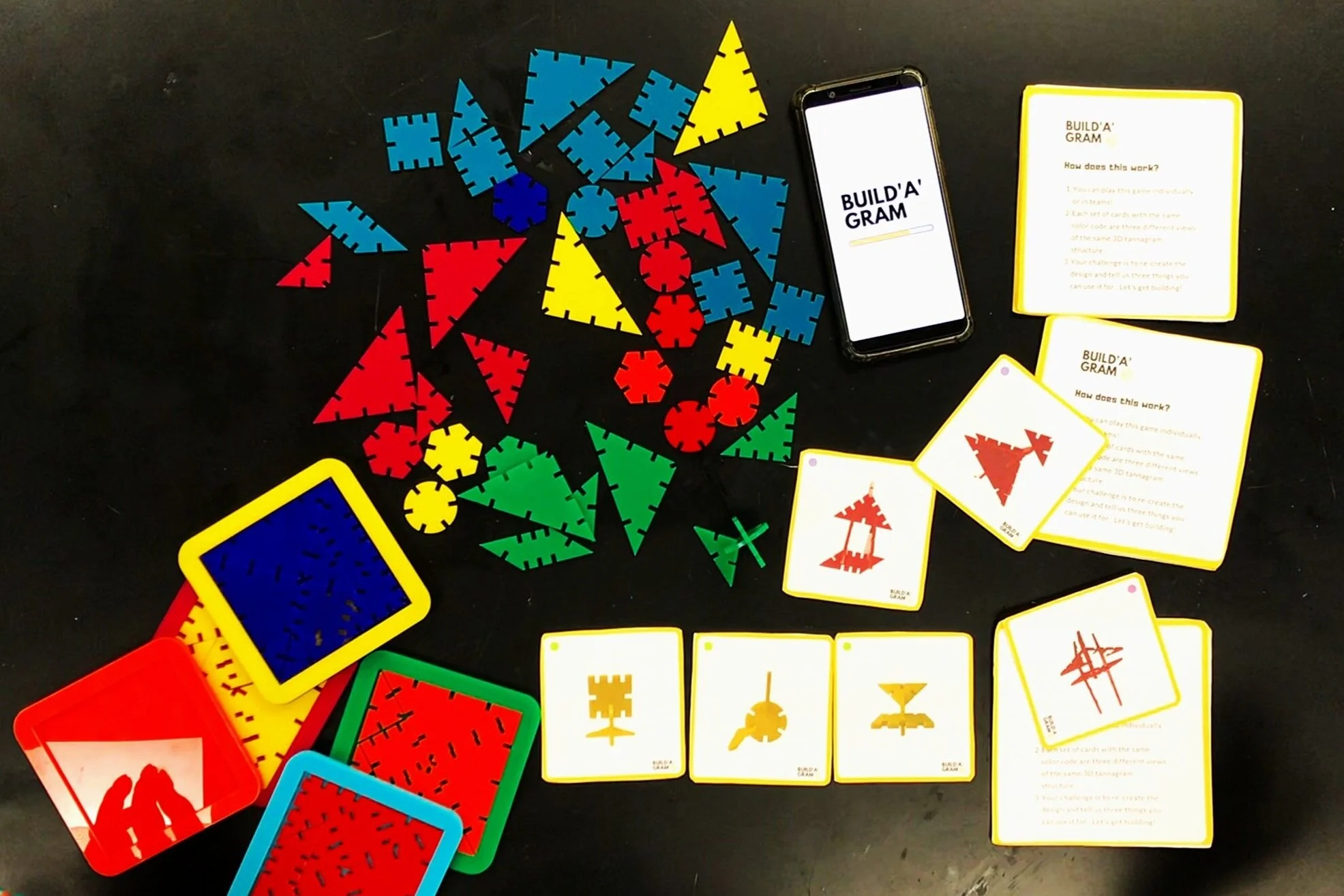
Inspired by the tangram geometric puzzle, Buildagram is a construction set that empowers learners to make their ideas concrete by exploring mathematical shapes and relations. Buildagram unites the creativity of free play with the structure of geometry, allowing learners to take the two-dimensional shapes of a tangram puzzle and transform them into boundless three-dimensional creations. The project was recently published by the Interaction Design and Children (IDC) Conference.
Team
Danielle: Symbolic Systems
Adelmo: Learning, Design and Technology
Kavindya: Learning, Design and Technology
Skills
Toy-design / Learning Experience Design
UX Research tools: Play-testing, Show & Tells, Think Alouds and guided conversations
Laser-cutting and low-fidelity prototyping
Problem Scope
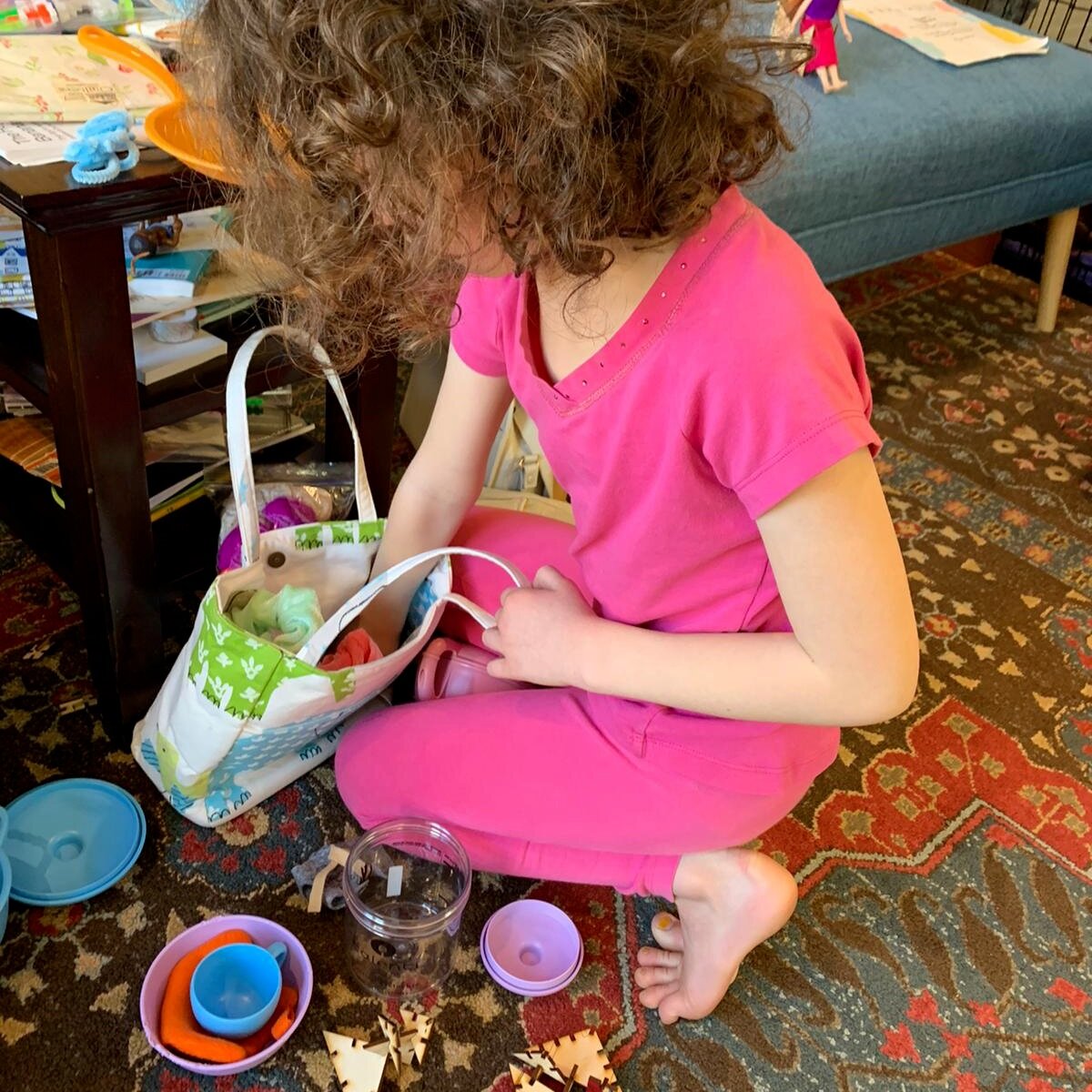
Buildagram was created as part of ‘Beyond Bits and Atoms’ - a hands-on design course at the Stanford School of Education. The project was centered around creating a dream toy for a real user. Our user was Anna, a seven year old who loved to build ‘random things’ but hated math. The process started with a few user-interviews (rather play-dates) with Anna, where we tried to get a sense of her every day, the kind of toys and learning experiences she had and her interactions with her parents and sisters.
Need-finding and Empathy Mapping
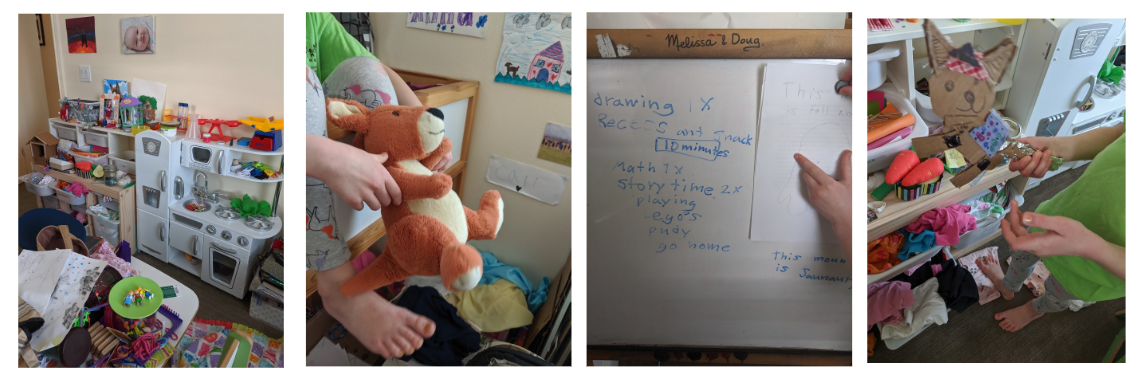
User interviews structured as play-dates and ‘show and tells’ helped us understand Anna’s play environment, the kind of toys she liked, the learning experiences she loved or resisted and the different relationships in her life.
Conversational interviews with her parents and one of her siblings helped us understand the extend to which Anna engaged in collaborative play and learning. From a product perspective it allowed us to understand parental preferences and concerns with regards to the different toys that they would allow Anna to access.
Building a persona allowed us to synthesize the different facets of Anna life through an empathy framework and arrive at our North Star:
How might we design a toy that helps Anna unleash her ‘maker’ spirit while secretly developing an interest in math.
Brainstorming and Ideation
Given that the course was spread across 8 weeks we structured a rapid ideation and prototyping process:
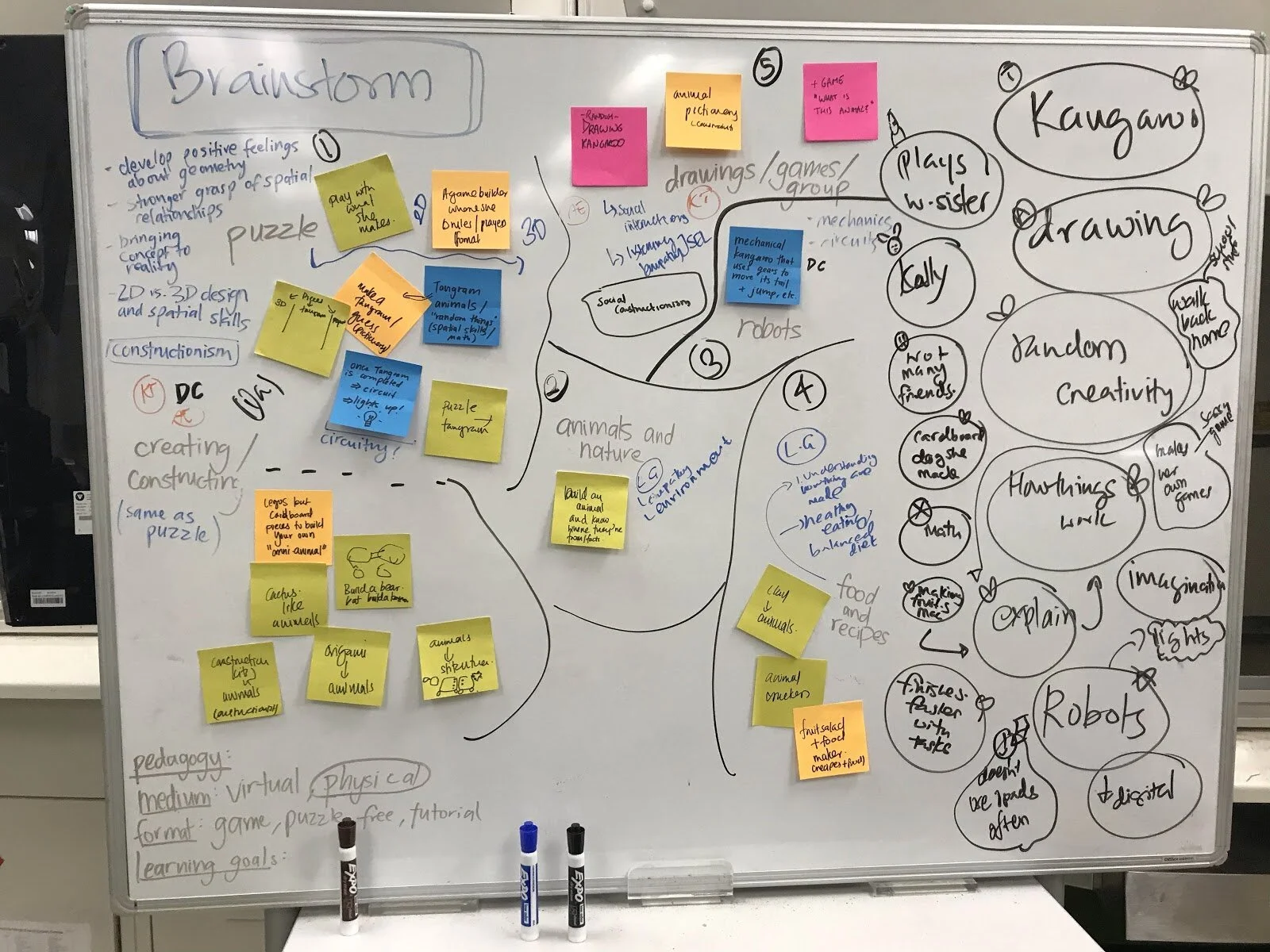
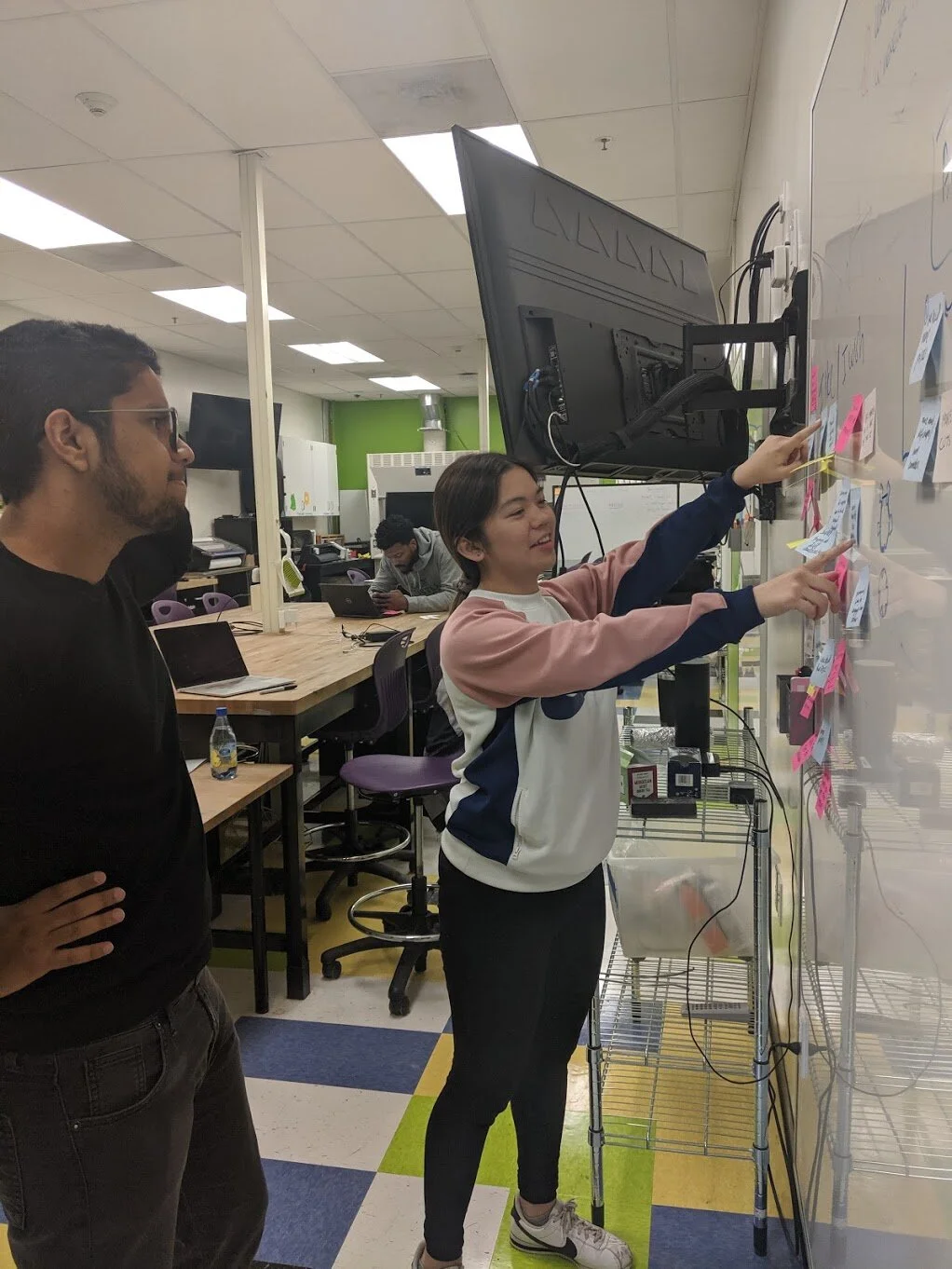
Mind-mapped our key takeaways from the interviews focusing on activities, feelings, toys, environment and people.
Rapid brainstorming session where we brain dumped all the possible concepts in terms of the kind of play-based learning experiences we could create.
Affinity Mapping to review and cluster all the post-its which led to four large clusters of ideas that attempted to achieve similar learning goals.
Mapping learning goals and pedagogical approaches for each cluster and voted up our most favorite clusters.
Prototyping and Play-testing
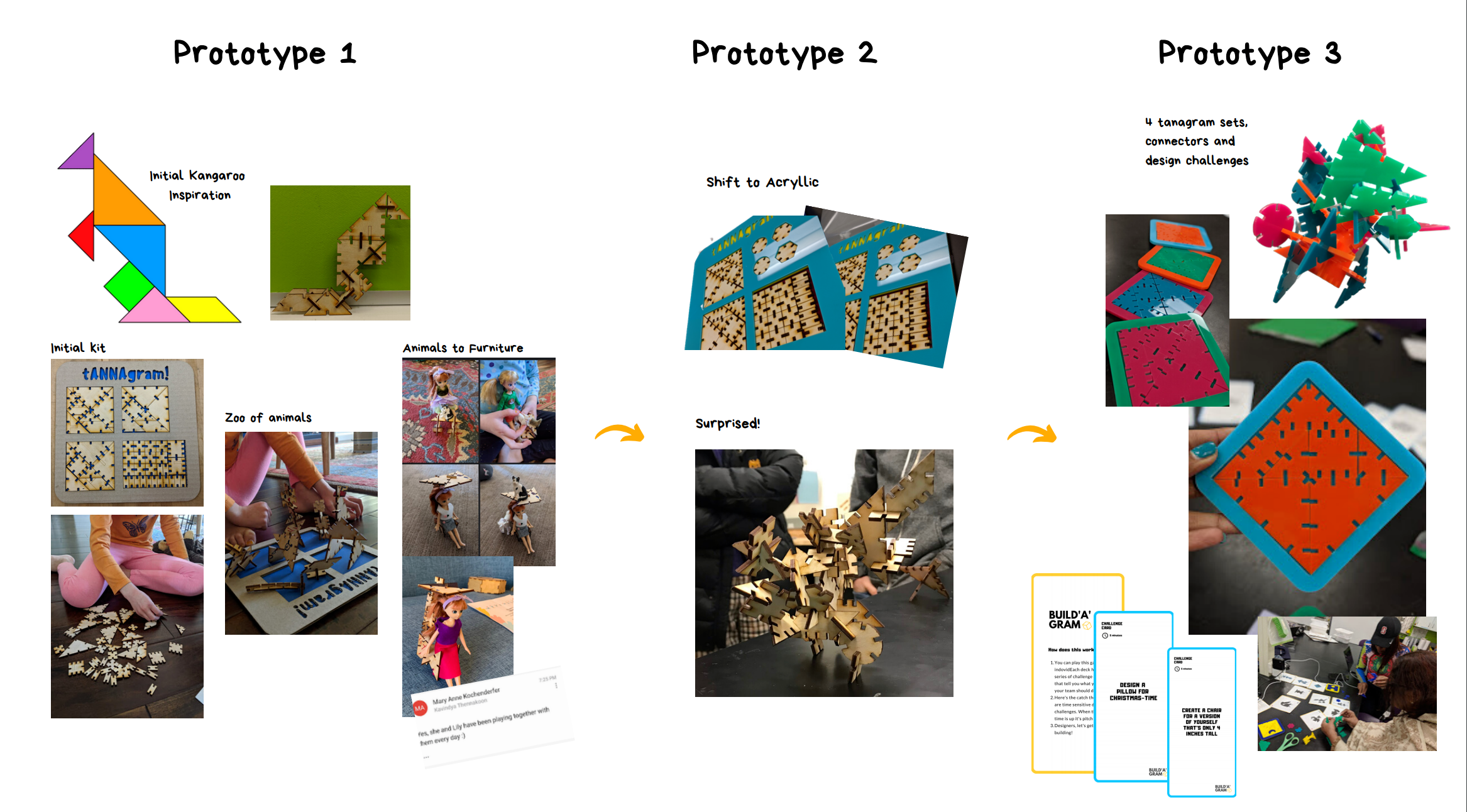
We went through three different iterations of the product, building on our inspiration from Tanagrams and the initial need to blend Anna’s love of making ‘random things’ with creating an interest for math.
1
Omni-animal - an enhanced Tanagram: we started off with cardboard and then plywood to create a traditional Tanagram (but 3D) to build a Kanagaroo which was Anna’s favorite animal.
We were surprised when Anna showed no interest in creating the Kanagaroo but went on to build an entire zoo of animals using the pieces. A few days later Anna’s mother emailed us to say that she has started building furniture for her dolls, with the pieces we had left her with.
2
Construction kit with more Tanagram pieces and connectors: we took forward Anna’s interest in building with the existing pieces and added a new set of connectors to expand the possibilities of what she could build. We gradually began to focus on how this product could enhance Anna’s understanding of 2D to 3D structures and principles of geometry.
We were surprised when we came back to our lab to find that Stanford students had built elaborate structures using the kits we had left behind!
3
Buildagram: A gamified Construction Kit: we transitioned into Acrylic sheets and built a more polished version consisting of 4 tanagram sets, multiple connectors and a card set of design challenges. We capitalized on how users got obsessed with the act of connecting and building on a simple idea. What we saw was similar to mindless doodling. We tested Buildagram with 25 users, including graduate students, undergraduates, elementary school kids and teachers.
We were surprised that engineering students who tested the product referenced how Buildagram helped them grasp core principles orthographic projection (a key skill in engineering)
Final Product
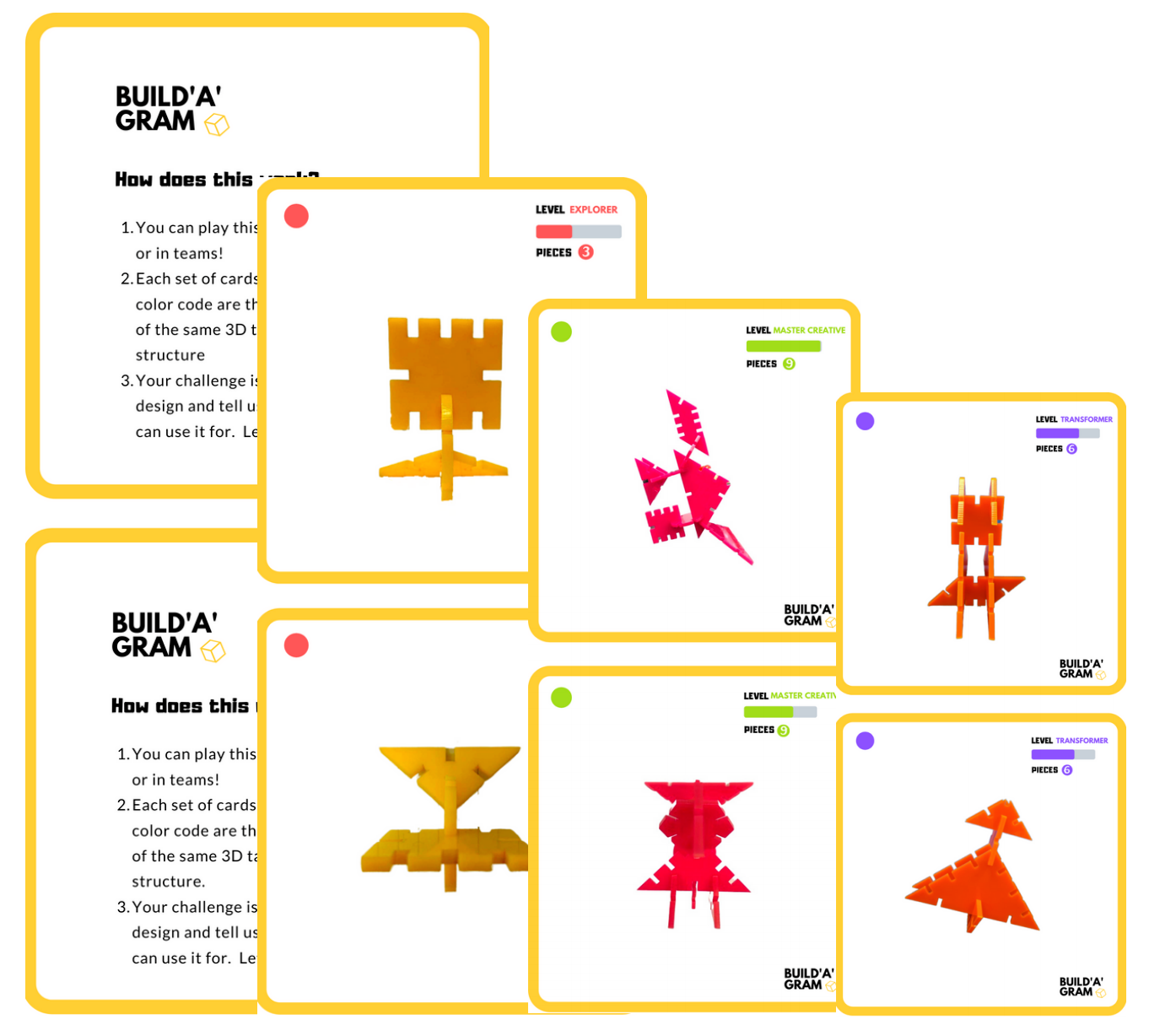
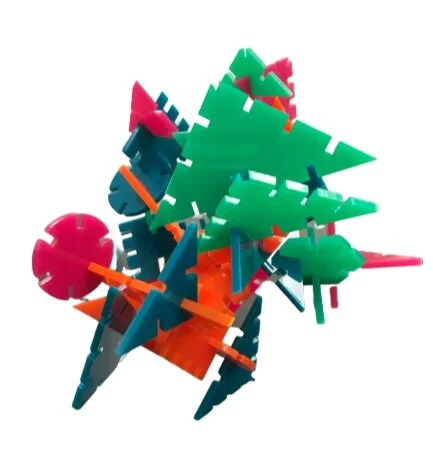
We tested and improved upon our third prototype which ultimately led to Buildagram: a construction kit focused on building descriptive geometry and spatial visualization skills of learners through design challenges and free play. The final product included three components:
The construction kit: four tanagram sets and connectors
Projection cards: depict 2D projections of the same 3D object, but each from a different vantage point. Users are challenged to interpret and recreate the 3D structures using the construction kit pieces. These projection cards help guide the Buildagram experience, facilitating a structured learning environment that explicitly develops the spatial reasoning skills of rotating and manipulating objects in different angles.
Digital application: Through the digital interface, Buildagram supports Universal Design for Learning’s (UDL) learner variability principle by providing kids with multiple media to communicate with one another and build a community of Buildagram users.
Reflections
Play-test, play-test and play test: kids are better toy designers than adults. Co-create with them.
Design for designers: construction kits need to strike a balance between creative free play and guided experiences (Resnick & Silverman, 2005)
Have a low floor and wide walls: successful learning experiences need to make space for endless and complex creative possibilities (wide walls) but more importantly make it easy and fun to get started (low floor)
Accessibility: growing up my mother could not afford to buy me a Lego set and I would always look at them on magazines or hear about them from my friends. When testing with Anna she once said ‘I like them better than Legos.’ These two stories helped us center accessibility as a core design principle of Buildagram since our competitor research showed us that most construction sets were not accessible for a working class family.