Co-Designing for Safety
Problem Scope
This project was done as part of the Stanford d.school course: Safe by Design: From Fear to Joy in Learning Environments. The focus of the class was on exploring ways of making classrooms safer; going beyond notions of physical safety to looking at ‘safety’ in a more expansive and equitable way. Our design partner was the ASCEND Charter School in Oakland and the course was structured in a way that allows us to co-create tools alongside the ASCEND team instead of ‘designing for’ them.
Need-finding and Synthesis
Since this project extended the entire duration of the 9-week class schedule the research and synthesis portions of the design process was blended into the arc of the class. The need-finding process touched on a couple of different methods:
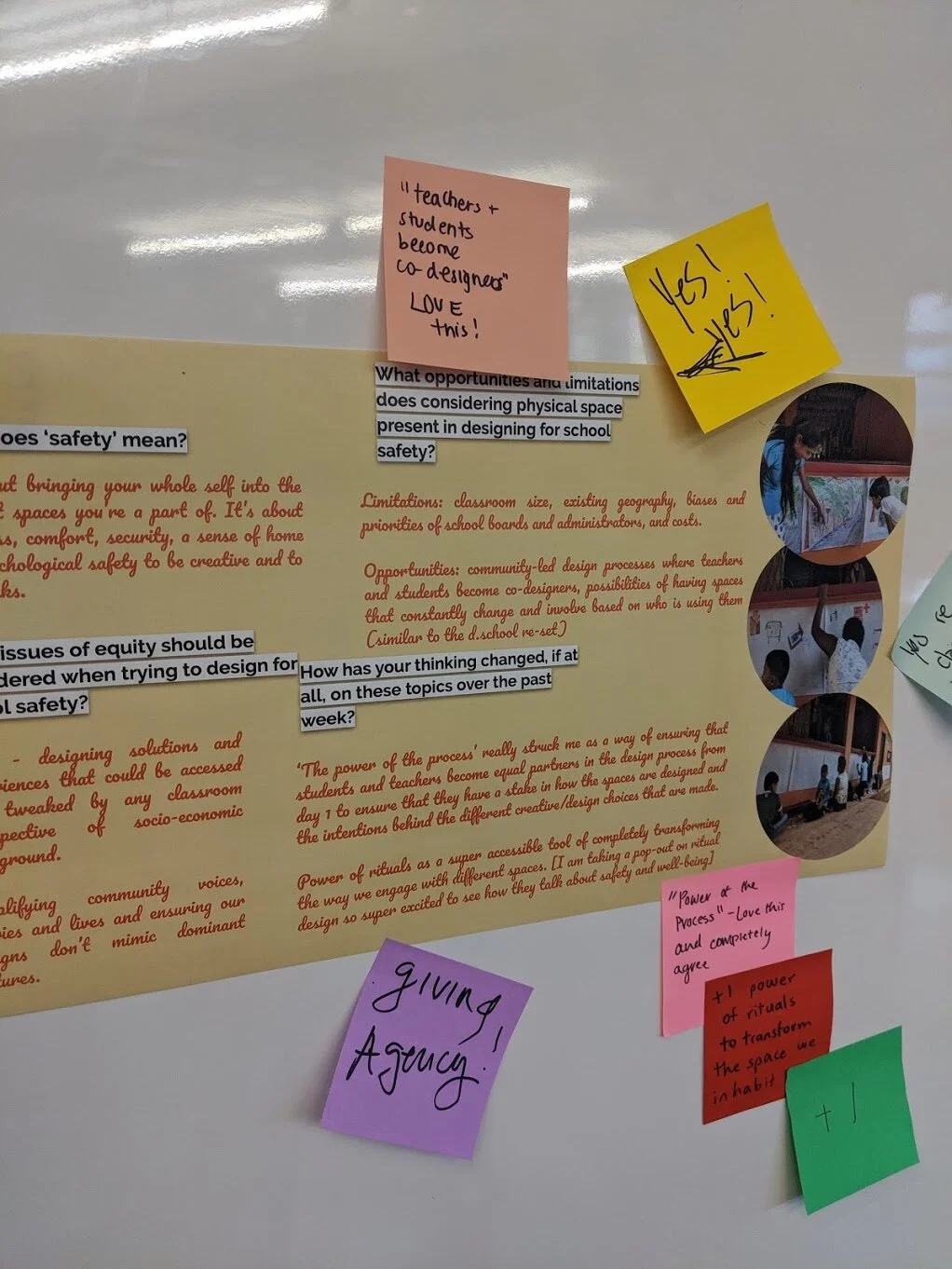
Two co-creation sessions with the ASCEND team where we were able to visit the school and co-design with them in finding ways of addressing safety within their own schools.
Reflecting on and consolidating our own experiences with safety by bringing in our own experiences as educators. Having worked with rural classrooms in Sri Lanka my first understandings of safety came from my experiences working with a community that faced constant elephant attacks and the school had to close down mid-day since wild elephants would enter the school premises.
Synthesizing these stories, narratives and community-driven solutions I had seen in the form of a digital story allowed me to make sense of my focus on equity and community-ownership when designing for safety in classrooms.
How might we design a protocol that is equitable and community-owned that would allow key stakeholders within a school community co-design for joy and safety?

Prototyping and Feedback
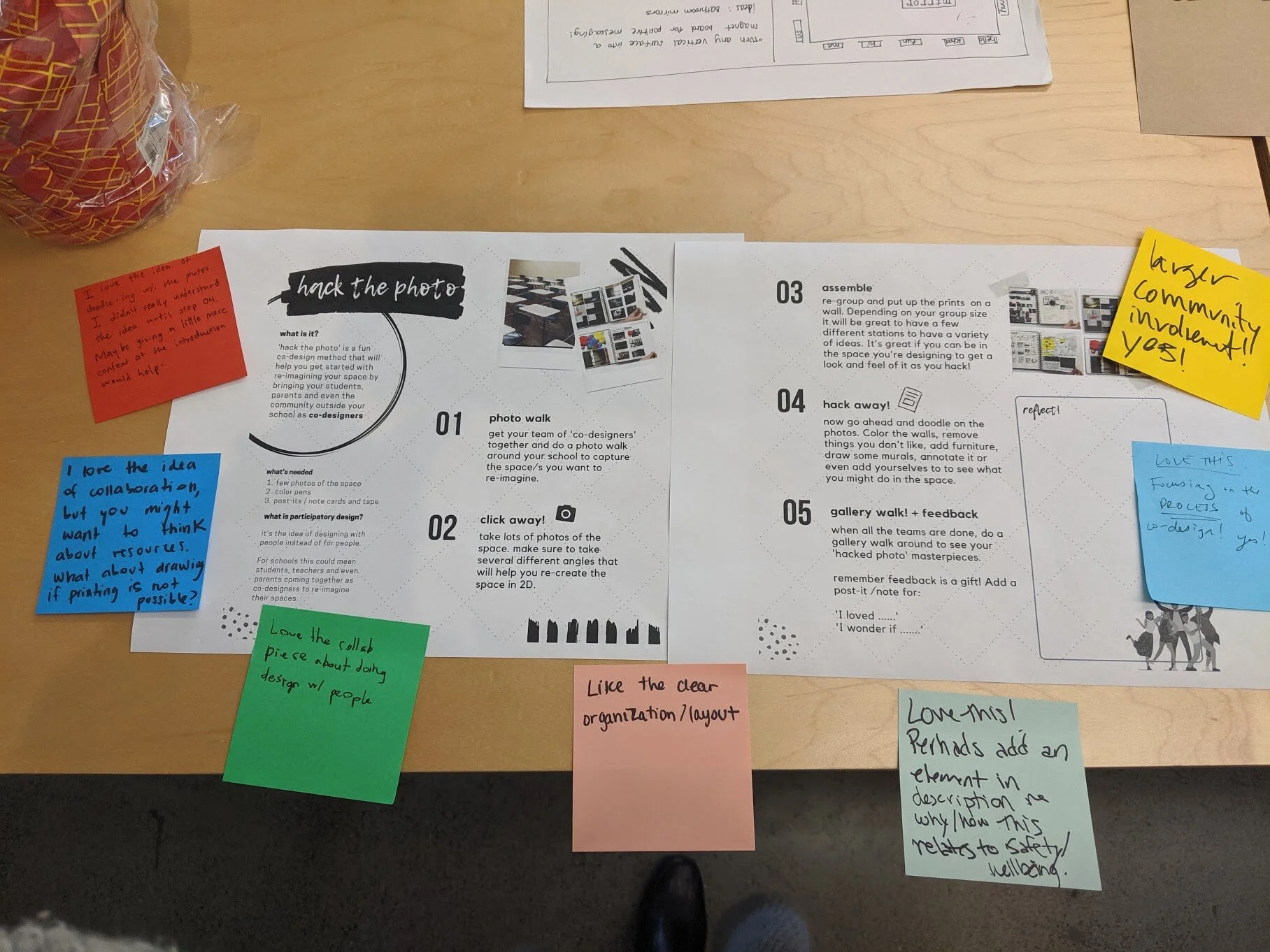
I went through two rounds of prototyping and feedback sessions to test two different concepts focused on my initial ‘How might we’ statement centering access and community-ownership.
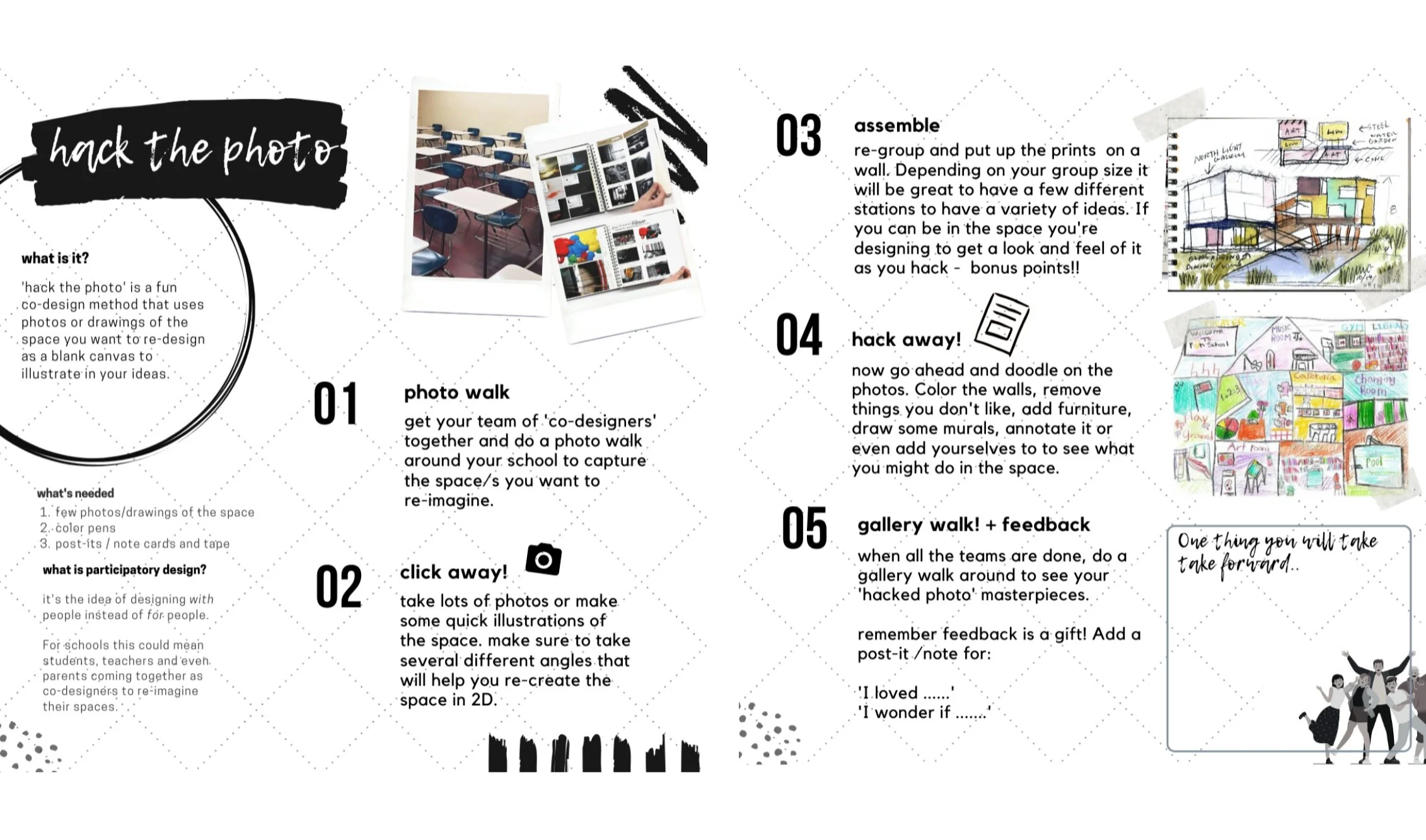
‘Hack the Photo’ - co-creation activity that allowed different stakeholders including parents, students, teachers, school administrators and community members to re-design a school space by hacking into a series of photographs or sketches of the school space. The intention was to provide a low-cost prototyping method for a school community to collate ideas about how they would like to re-design a space.
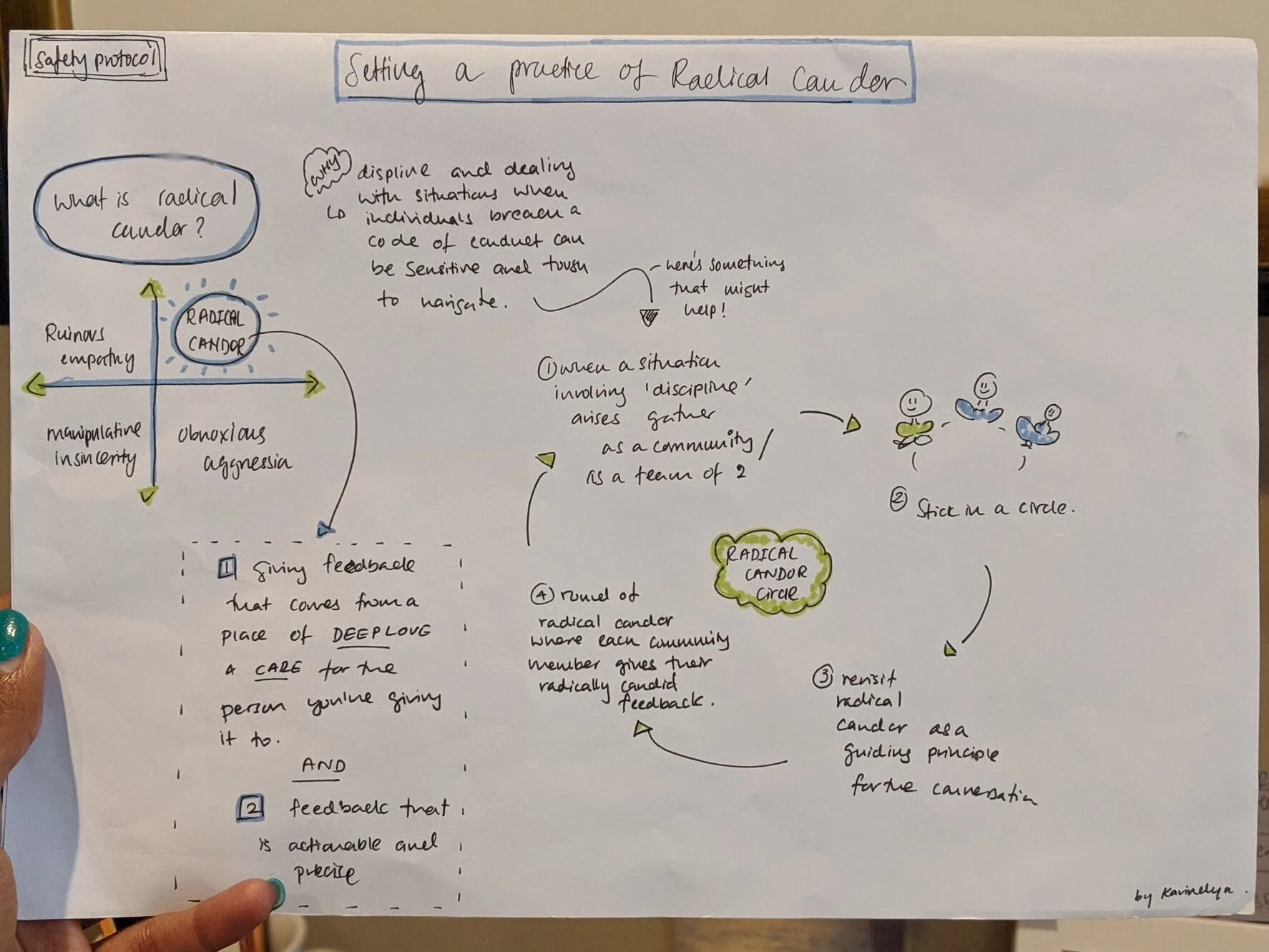
‘Radical Candor’ was a paper prototype that focused on building a protocol that could complement a co-creation session. A protocol was defined by the teaching team as a procedure or set of rules that governed a certain process. ‘Radical Candor’ was a concept created by Kim Scott and in a gist it’s a way of giving direct and sincere feedback that ‘cares deeply’ for the receiver of the feedback but also ‘challenges them directly’ to become their best versions. My intention was tweak and incorporate this concept as a feedback tool within co-creation sessions. To allow stakeholders to remain kind, intentional and sincere while giving feedback that is actionable.
Key takeaways:
Making the concept of ‘co-creation’ more explicit
How can we give stakeholders a ‘way of working’ that they can make their own and apply to different contexts
Format might be confusing for a first-timer engaging in or facilitating a co-creation session.
Final Product
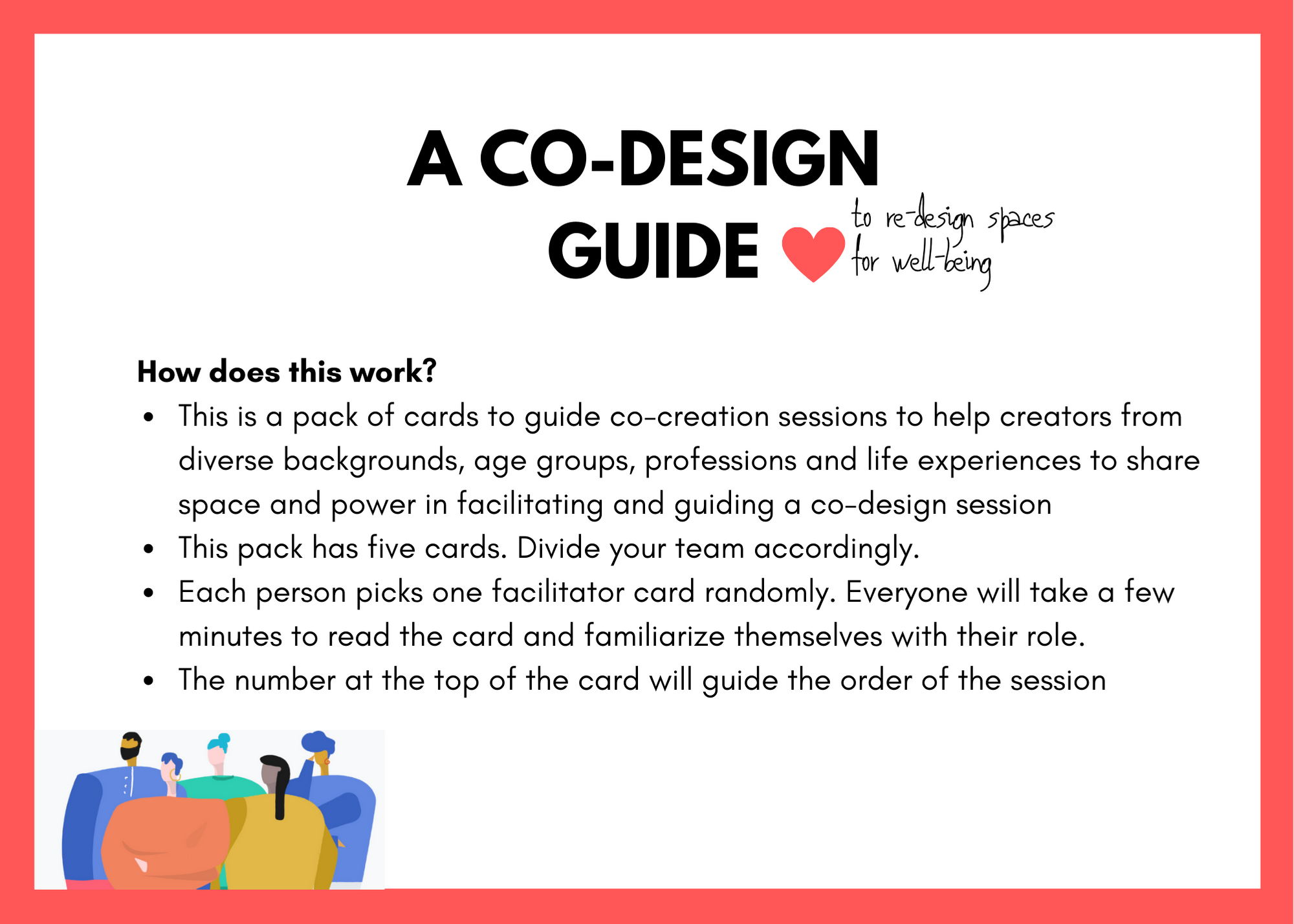
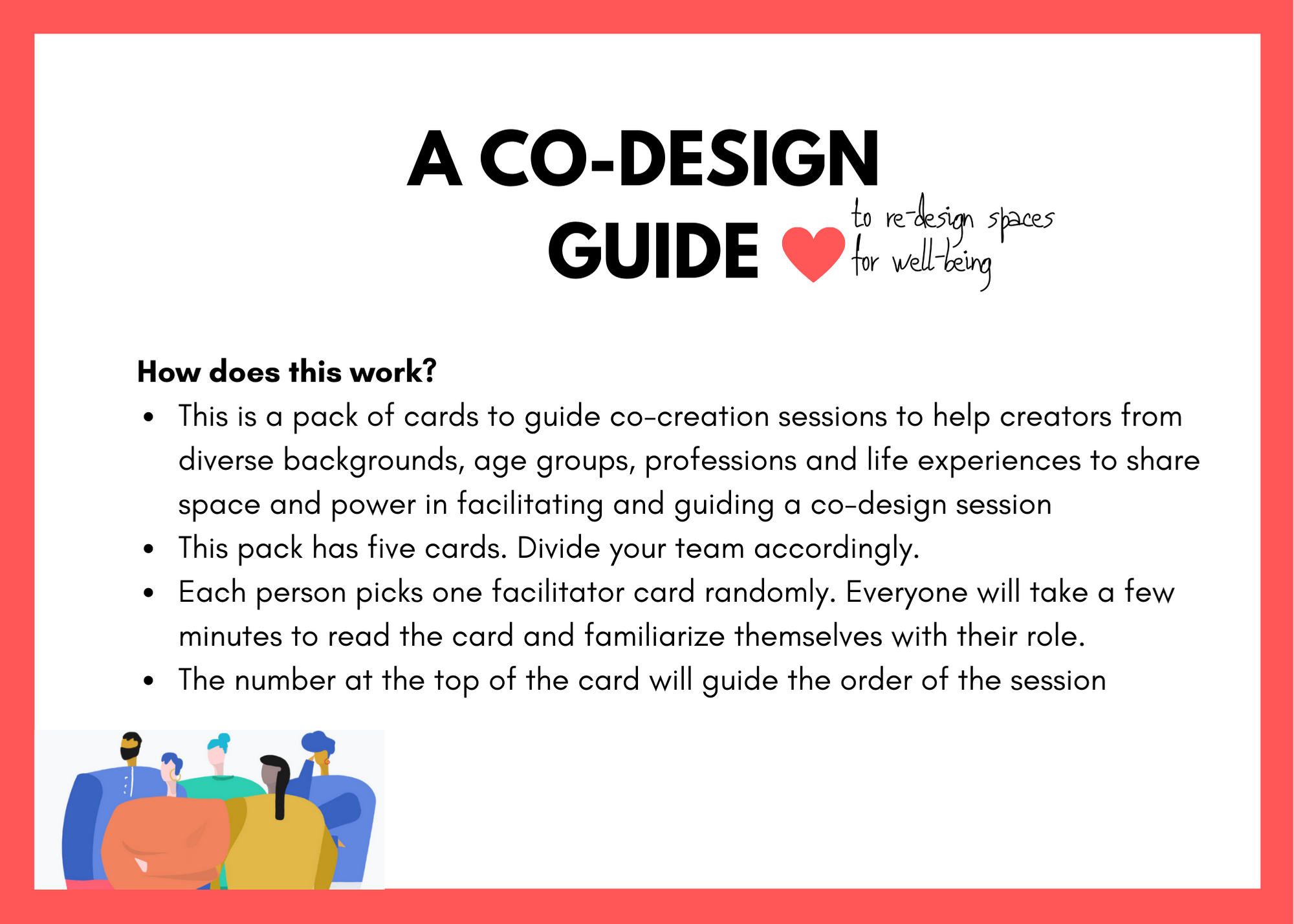
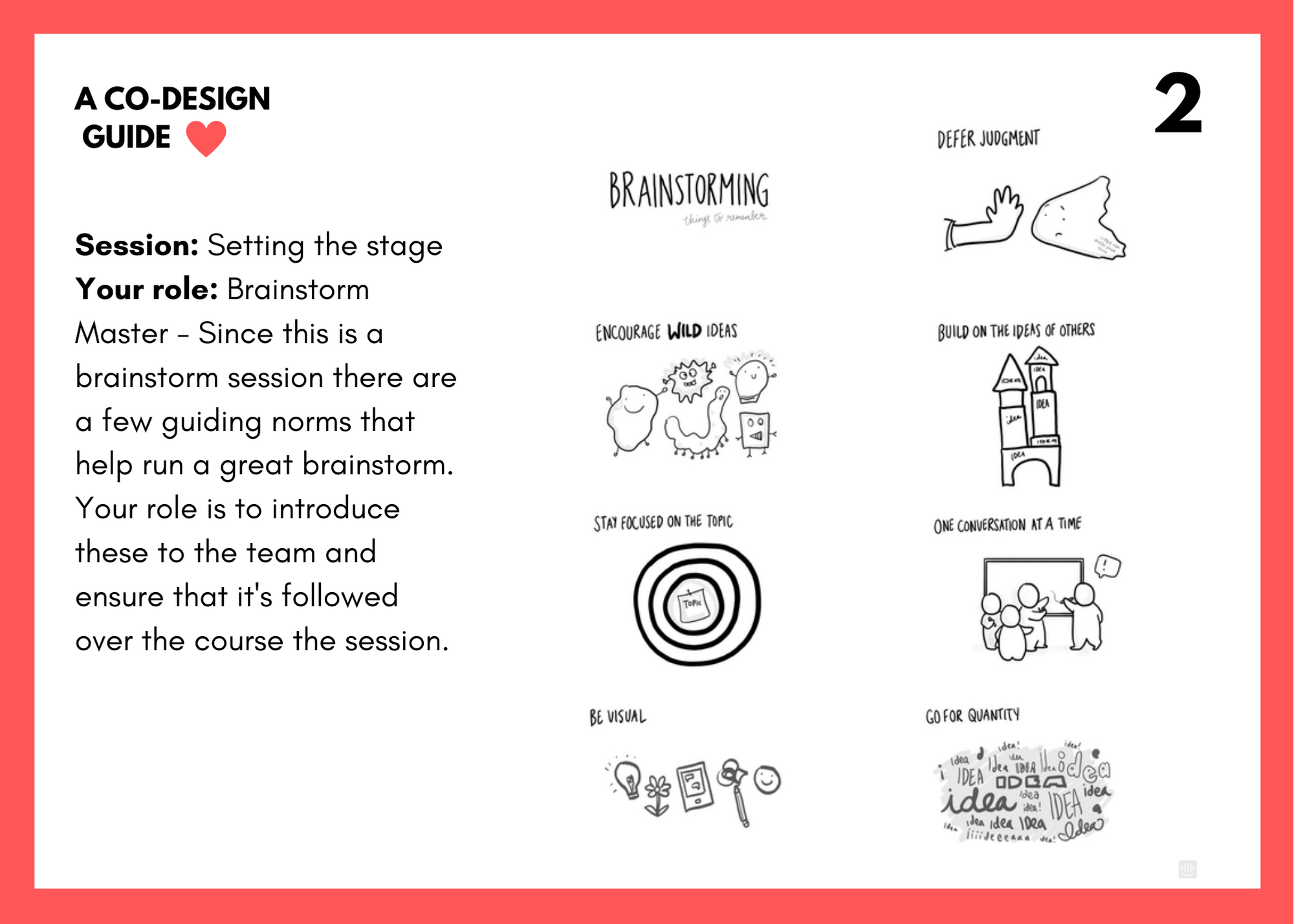
Incorporating user feedback and revisiting the contextual understandings I got from ASCEND in terms of how different stakeholders within a school community interacted and their respective desires and pain points I designed a ‘A Co-Design Guide’ in the form of a card deck that allows stakeholders from within a school community from parents and students to teachers and custodians to come together as co-creators to re-imagine their classroom spaces.
Defining features:
The card deck centers the idea of sharing space and power. Everyone gets the chance to be a facilitator irrespective of their position in the hierarchy. This was an issue I witnessed where student voices were sometimes stifled and community members like custodians were mostly removed from the conversations.
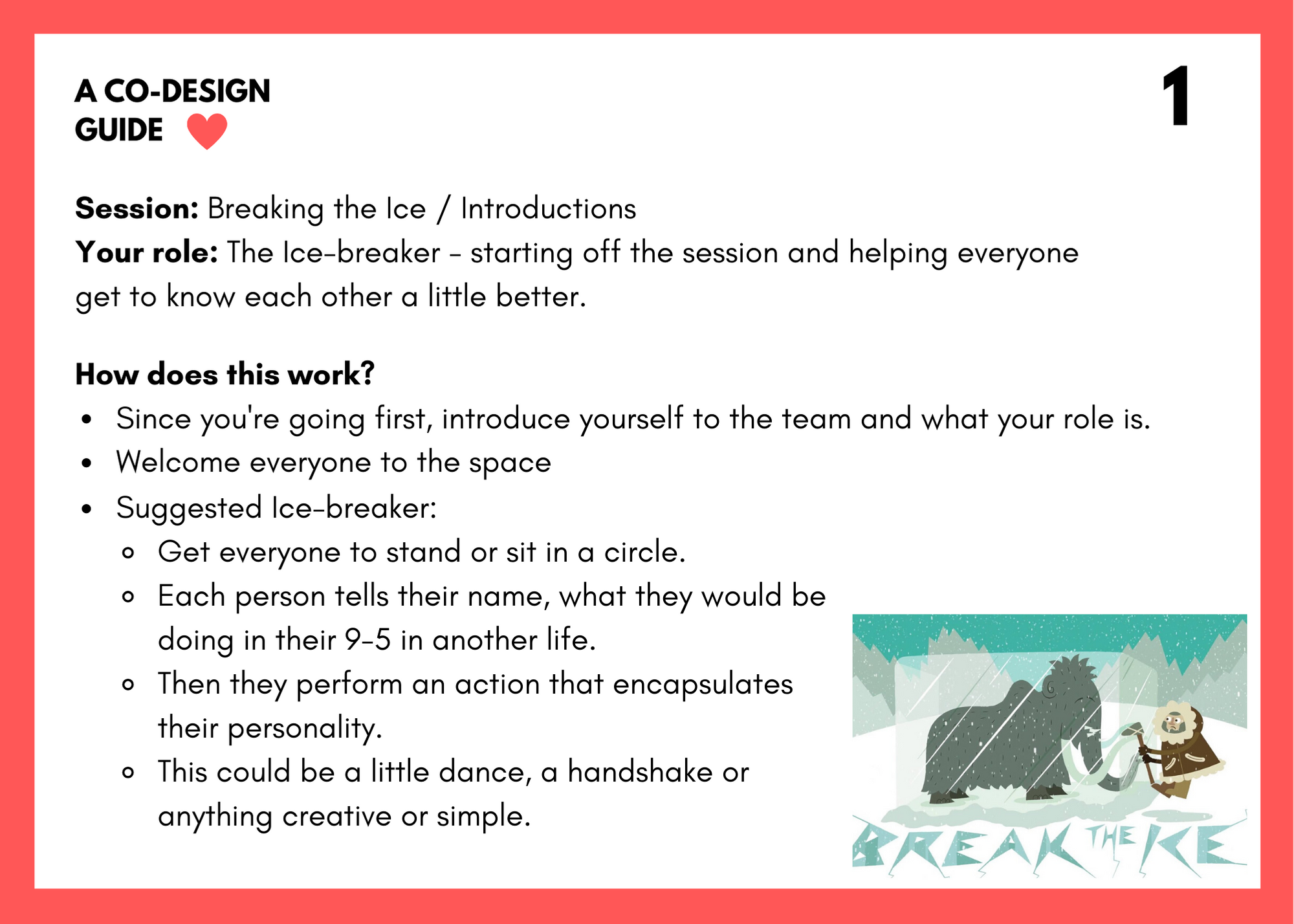
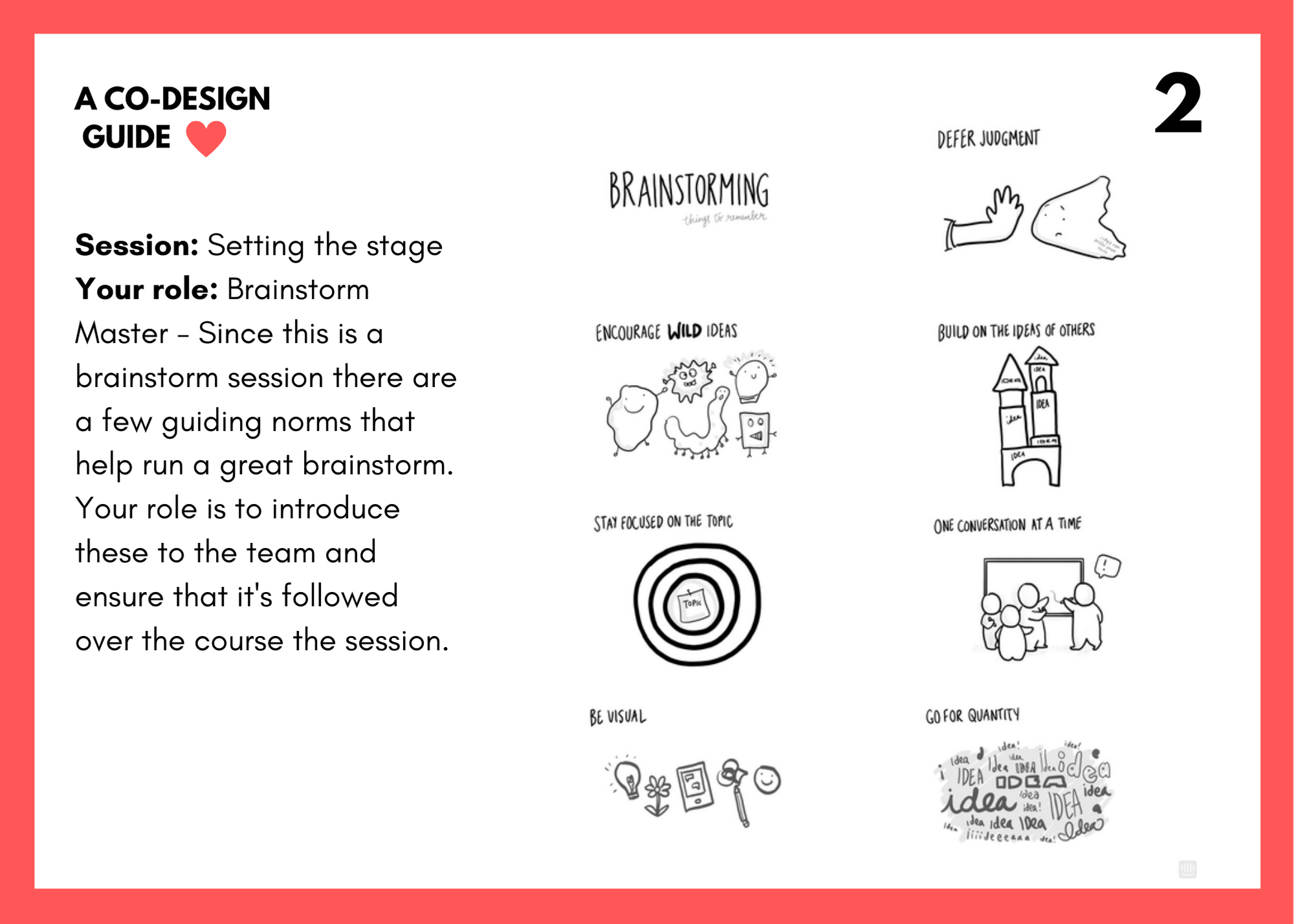
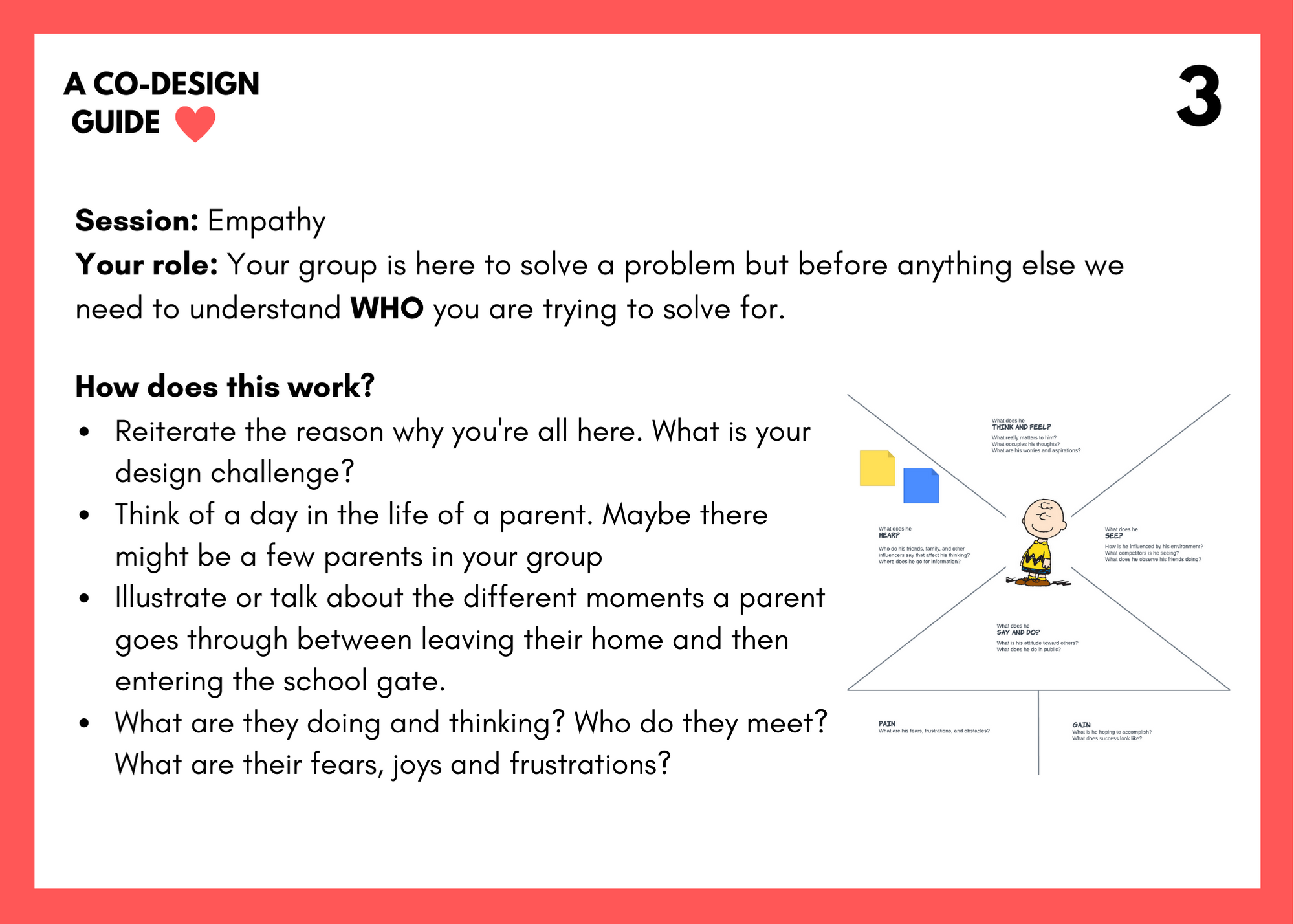
The cards also help introduce certain key co-design concepts such as ice-breakers, empathy mapping, brainstorming and ideation in a quick and simple way.
The card deck is a play-based guide and takes away the stress of organizing and getting started given that teachers and administrators already handle an overly stressful workload.