
Coming of Age in Sri Lanka
Turner’s take on Liminality
Nayana’s house is in a state of panic. Her mother runs frantically trying to find sufficient white clothes to cover all the mirrors around Nayana’s room. Calls are made to relatives, distant aunties, female cousins and of course her maternal and paternal grandmothers. The Reddhi Nanda is immediately summoned to take away the clothes stained by the first flush of blood along with her pair of gold studs. Nayana is locked up in her room with all the windows closed to ensure that she avoids the gaze of the evil eye. The astrologer is contacted to check the alignment of her stars. How many children will she have? Will she get married anytime soon? And what will her auspicious color be for the ceremony and for how many days should she be kept in isolation. Nayana will soon become a woman.
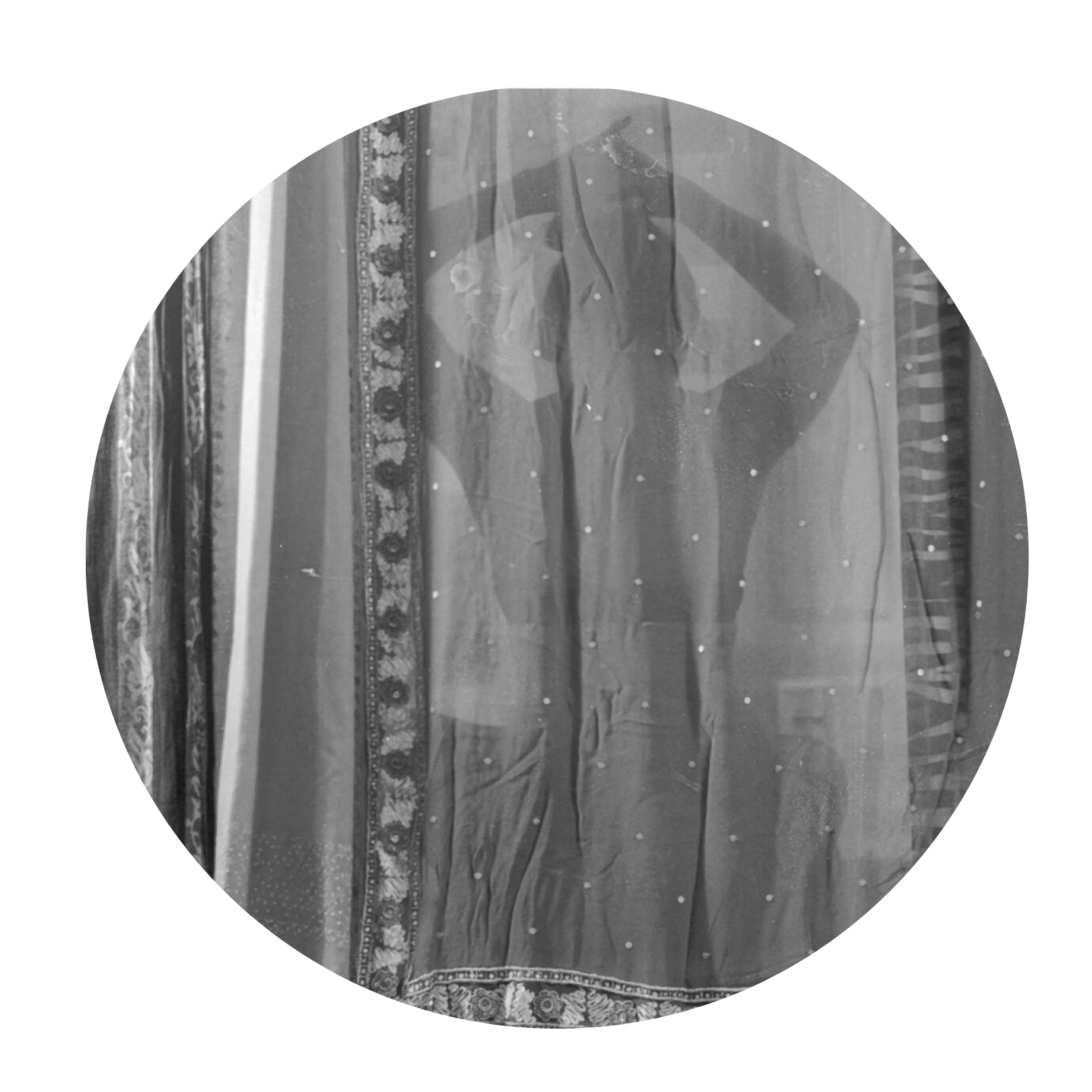
My focus through this paper would be to unpack the ritualistic practices surrounding coming of age ceremonies in Sri Lanka and to better understand the interplay of ethnic symbolism, folklore and gender within this context. I would be using Victor Tuner’s piece on “Liminality and Communitas” (Turner 1969, p 358-372) to analyze the shifting positionality of girls who move through these customary processes. I attempt to break down the coming of age practices into three chronological sections. Firstly a) the occurrence of the first period that marks the start of the rite of passage followed by b) the period of isolation and finally c) the ceremonial revealing of the new woman. My main hypothesis is based on how these three stages can be directly compared with Van Gennep’s tripartite division of separation, margin (Limen) and aggregation; three phases that he believed to be universally present in every rite of passage (Turner 1969, p359)
The occurrence of the first period signifies the girl’s separation from society, the period of isolation is one of liminality where the girl is neither a child nor an adult where she is denied the ordinary ways of life such as movement and human contact. Finally the ceremonial revealing is a process of aggregation into society and adulthood. However I move onto arguing that the liminal status attached to a young girl during this rite of passage continues to be an integral part of her life beyond the aggregation phase. Thus the interplay of gender leads to a sense of fluidity where certain liminal traits become more permanent beyond the aggregation phase.
Rituals surrounding puberty have occupied an important role within the sphere of rites of passage in Sri Lanka. For a Sri Lankan girl this becomes the single most important rite of passage before her marriage. Sri Lanka boasts of a rich mix of religions and ethnicities; a blend of Sinhalese, Tamils, Muslims and Burghers who follow a range of religious denominations including Buddhism, Hinduism, Islam, Christianity and number of other belief systems. This rare assortment of customs, beliefs, folklore, deities and value systems gives us such a wide range of fascinating variations of coming age ceremonies to explore and understand.
Let us start by analyzing the first phase of separation. As soon as the first dash of blood is sighted, the girl is separated from the ordinary functioning of society. All her clothes and jewelry worn during the period will be taken away usually by a woman referred to as “Redhi Nanda” these are females who are traditionally involved in the laundry industry who come by houses once a week to gather all the dirty laundry to be washed and dried. However many of the respondents who were either Catholic or Muslim mentioned that their clothes and jewelry were buried, which alludes to the fact that the presence of the Redhi Nanda might in fact be a religiously inclined practice found more commonly among the Buddhists.
Usually on the first or the second day, the mother of the girl along with another female relative seeks the advice of an astrologer on her horoscope. The astrologer will forecast the future of the new woman to be, with a focus on marriage and fertility. During this consultation the astrologer will also specify the length of the time the girl should remain in seclusion, the lucky color to be worn at her ceremony and the time at which her auspicious bath is to take place. Through the various accounts that were shared with me, it was evident that the reliance on astrology was more a religious inclination followed by the Sinhalese Buddhists.
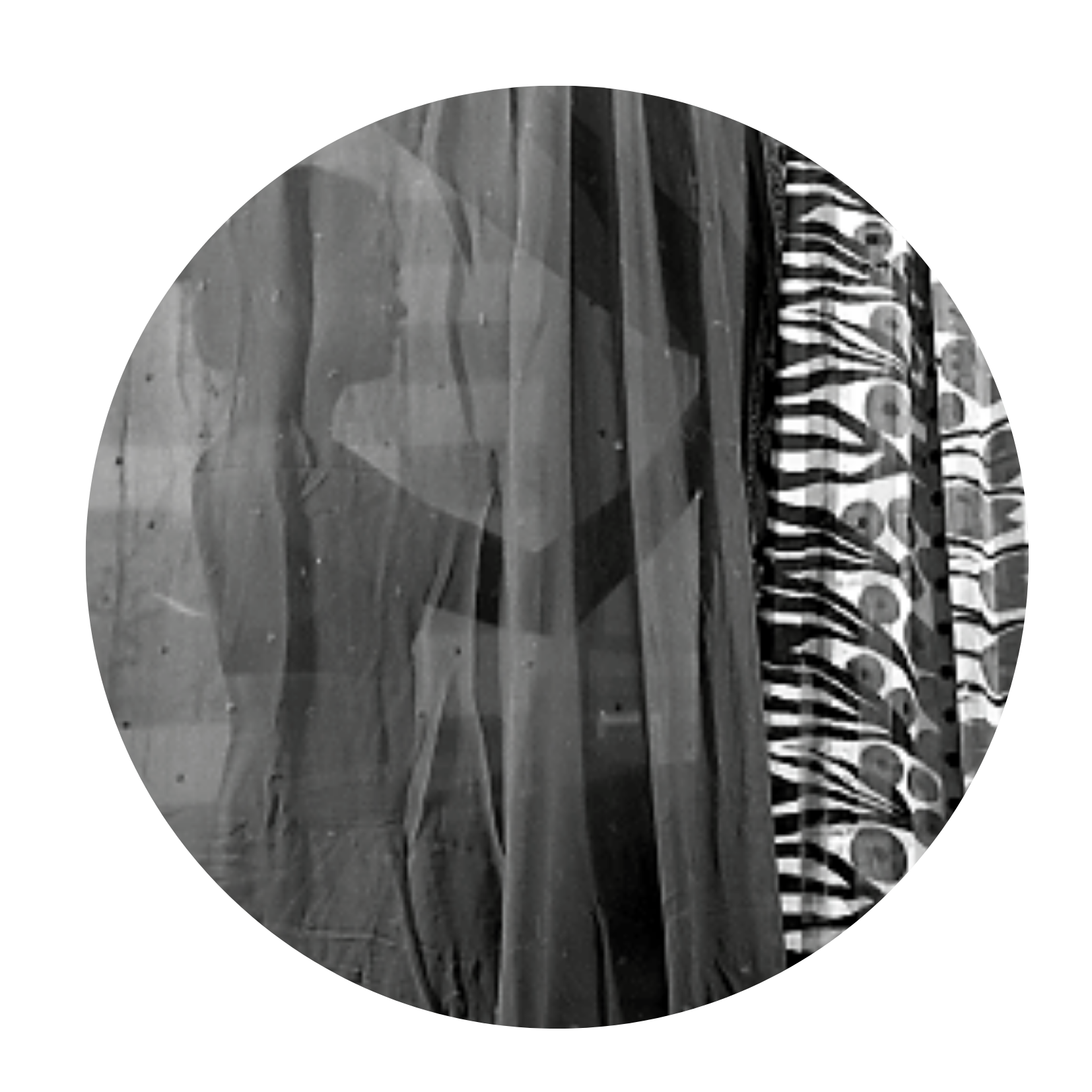
Next we move in to unpacking the period of seclusion (Limen or margin). As we directly compare this phase with Turner’s liminal phase, it is clear that a young girl subjected to this period of seclusion becomes a liminal entity. Their position in society over this period is ambiguous, they’re neither here nor there, caught between the margins of childhood and womanhood. Turner defined neophytes as those “possessing nothing” and who are required to adopt a role of passivity and compliance (Turner 1969, p359) Many of the Sri Lankan women I spoke to expressed that they were rather confused throughout the liminal phase by the absence of any reasoning behind the various rituals and rules that they each had to comply to, however they obliged due to the various repercussions surrounding social pressure, misfortune and the evil eye.A girl on her first period is considered to be fragile and weak and in the need of constant protection. The folklore surrounding the black prince or the Kalu Kumaraya is an interesting one. Legend says that the Kalu Kumaraya has an inherent desire to enter and invade the bodies of virgin girls who are on the threshold of entering womanhood, hence girls in seclusion are considered to be prone to the evil gaze of bad omens, demons and spirits.
Many of the respondents recalled how either an Axe, a Giraya (an arecanut cutter) or a safety pin was placed near them. Within Sri Lankan ritualistic symbolism any form of metal tool or weapon signifies strength, power and protection. While making direct comparisons between the three categories outlined in Turner’s analysis and the three stages found within coming of practices in Sri Lanka, I want to argue against the notion that there is a clear demarcation between the liminal phase and the aggregation phase. The wider discourse surrounding gender complicates the matter and to assume that the liminal phase ends simplifies the reality surrounding coming of age practices. I would like to draw in from various ritualistic practices that originate within the liminal phase that however continue to play an integral role in the aftermath of a young woman’s life.
A striking custom that is prevalent within this period is the denial of any contact with a male. Ruvi, a young woman I spoke to mentioned how her father closed his eyes when she mistakenly walked out of her room, “I ended up thinking there was physically something wrong with me and I couldn’t even check because I wasn’t allowed to look in the mirror.” Many reasons are given for this, such as the risk of acne and other skin maladies, the evil gaze and Aswaha Katawaha loosely translated as the evil jealously of the eyes and the mouth. During this period a girl is not allowed to even see herself through the mirror. This distancing from those of the opposite sex makes reference to the fact that now the young girl is illegible for marriage and is sexually ready. Whether or not she continues to maintain this distance will be key determinants of her chastity and character.
Secondly girls in seclusion are denied access to any place of worship, a restriction that transcends her initiation period where even a grown woman on her period is considered impure for a Temple or a Kovil. For instance young women are not allowed on the top most shrine that contains the tooth relic of Lord Buddha irrespective of whether they’re menstruating or not. However, strangely the tooth relic was brought in to Sri Lankan hidden in the hair of Princess Hemamala. This takes us back to Turner on his discussion of “Mystical Danger and the Power of the Weak” where he speaks of how across borders and cultures most liminal situations and entities are attached what he calls magico-religious properties, where these neophytes are viewed as dangerous, polluting and inauspicious (Turner 1969, p 368) In countries like Sri Lanka perceptions surrounding menstruation that are formulated during these rites of passage continue to infiltrate the wider discourse on gender, inequality and the subordination of women.
Thirdly during this period of seclusion one’s ordinary dietary and hygienic practices are completely changed. The initiate is neither a child, woman nor barely human. Aisha, a 23 year old young Muslim reflected back on her experience with disdain and repulsion, “I was forced to eat and drink ridiculous concoctions including raw eggs and black coffee and I was told how you shouldn’t bathe or cut your nails or hair during it (the period)” Many of the women that I spoke to had similar experiences of not been allowed to bathe or eat oily food and meat however these myths and practices continue well beyond one’s first period. During my conversation with Aditi Gupta the founder of Menstrupedia[1] she stated how these coming of age practices create a deep rooted sense of fear of being around men which has become a huge cause of sexual violence and she was of the view that period rituals are been used in a systematic manner to control young girls as soon as they hit puberty.
“I was forced to eat and drink ridiculous concoctions including raw eggs and black coffee and I was told how you shouldn’t bathe or cut your nails or hair during it (the period)”
— Aisha
Finally we move in to discussing the grand revealing of the new woman to the public or the aggregation stage as defined by Turner. This final phase is marked by the ceremonial bathing of the girl usually at an auspicious time at dawn with jasmine flowers and other medicinal herbs. This is followed by a large gathering of family and friends where the new woman is revealed to the world and showered with gifts of money and gold. The bathing ceremony bares fascinating resemblances to the installation rites of the Kanongesha of Ndembu, where the chief-elect and his wife are similarly bathed in water and medicinal herbs while they sit in a position of modesty (Turner 1969, p 362). Usually the new woman is asked to break the pot of water with which she was bathed, or she is asked to break a coconut. The manner in which the coconut shatters bares various symbols that signify her fertility and marriage, however if she is unable to break open the coconut it’s considered a symbol of lifelong bad luck. One of the respondents recalled how she was asked to make cuts on to the bark of a Jak fruit tree with an axe, which is considered a symbol of fertility and motherhood due the presence of milky residue.
This progression from exclusion from the community to reintegration, traces a process of re-birth, where the initiate is firstly denied her basic roles, rights and responsibilities as a member of the community, to be then later reintegrated with a different role and status. In the local context this is considered to be a young girl’s second birth now as a woman; a virgin, a mother, sister and an adult. This could be compared to the Ndembu rituals of initiation as described by Tuner where after the chief-elect is insulted and ridiculed by his subjects he is then re-born as a new leader. (Turner 1969, p 363). With the completion of the bathing ceremony the woman has now ended her transition and is in a fixed state (Turner 1969, p 366) however the various rituals, myths and practices that were attributed to her during the liminal stage will continue to impact her status within her community, her gender identity and life choices.
[1] Website : https://www.menstrupedia.com/