Reimagining Loyalty
Brief
M* - is the largest supermarket chain in the Caribbean with thriving operations across the region. As a brand that was a household name when it came to grocery shopping, the team was looking to revamp its customer loyalty program. There were three critical problems they were trying to get to the bottom of:
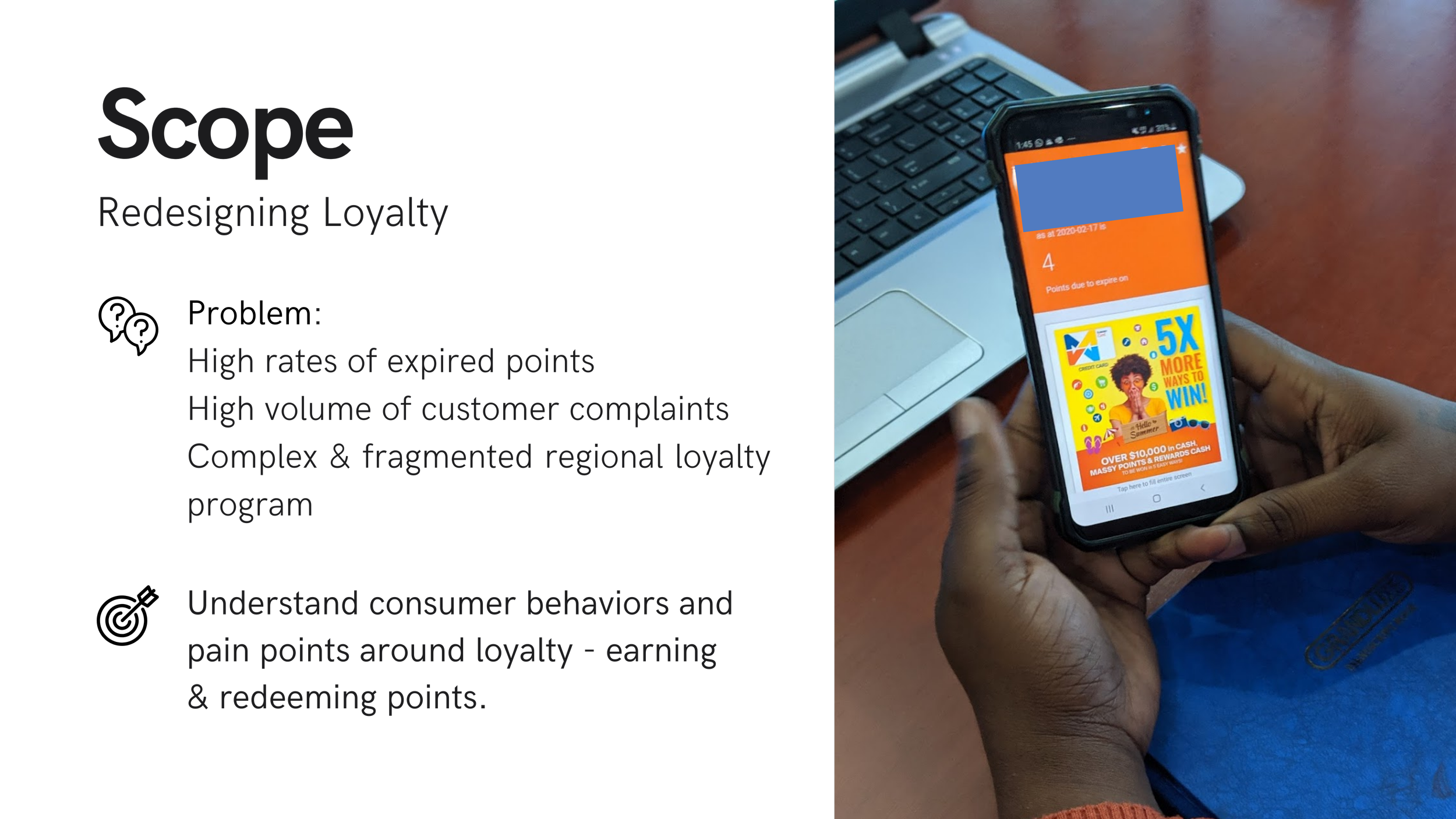
High rates of expired points that customers hadn’t redeemed
A high volume of customer complaints coming into their support center
A complex, fragmented regional loyalty program, that was becoming an operational challenge
*Name of client redacted
Process
As the UX Research lead for the project, my role was to plan and execute an end-to-end user research project to a) figure out why customers were collecting points but not redeeming them, b) map out user behaviors and pain points throughout the customer journey, and to c) collaborate with the product team to refine the loyalty program and design a new digital experience for loyalty card users.
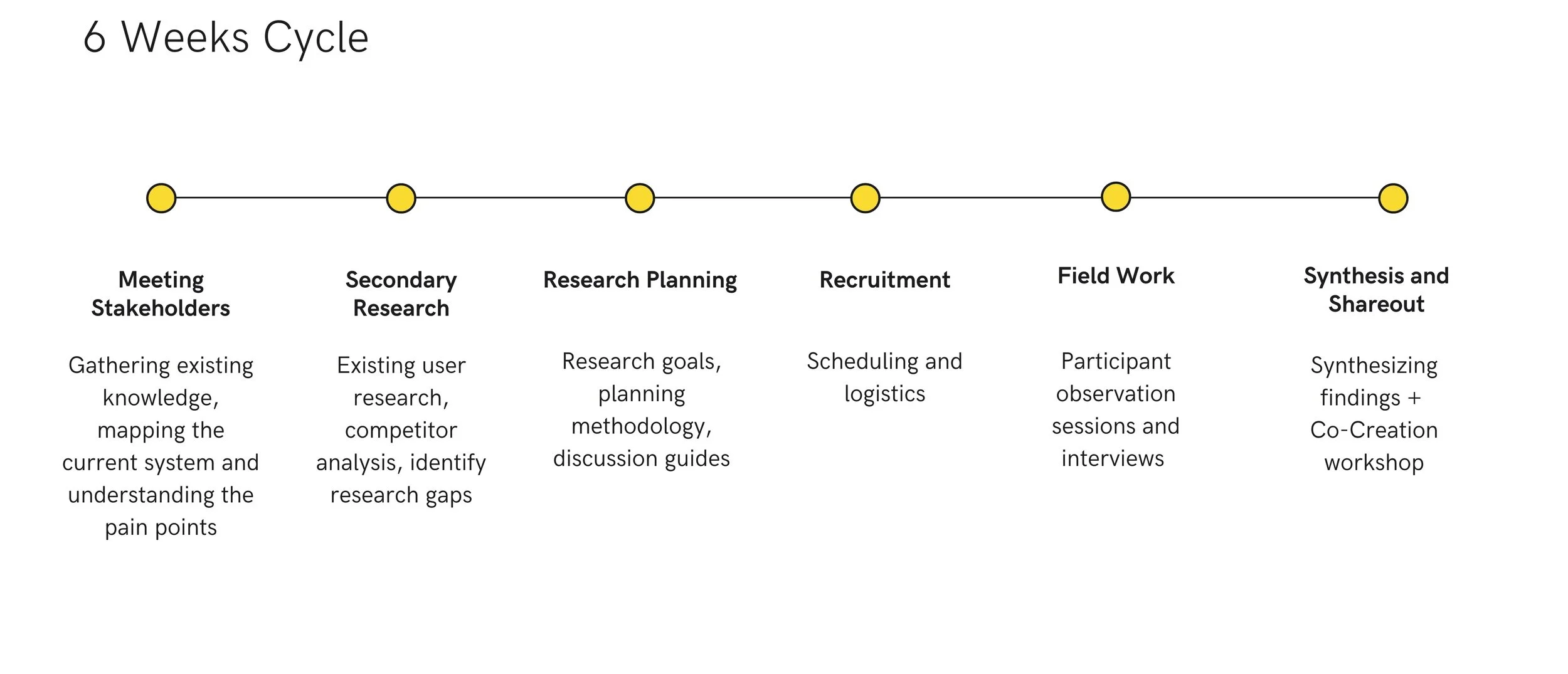
I planned the research project to fit into a 6-week sprint:
Research Methodology
I structured the research into two parts: secondary research to consolidate existing research so that I was able to take stock of what we already knew about our users and primary research that was focused on a 1-week field study in Barbados.
Secondary research: I spent a week gathering, labelling and analyzing existing research from the following sources:
Information gathering sessions with the stakeholders
Online customer reviews from various M* social media channels
Customer complaints from the support center
Competitor analysis of other loyalty programs in the region to identify benchmarks and the kinds of loyalty experiences our users were exposed to.
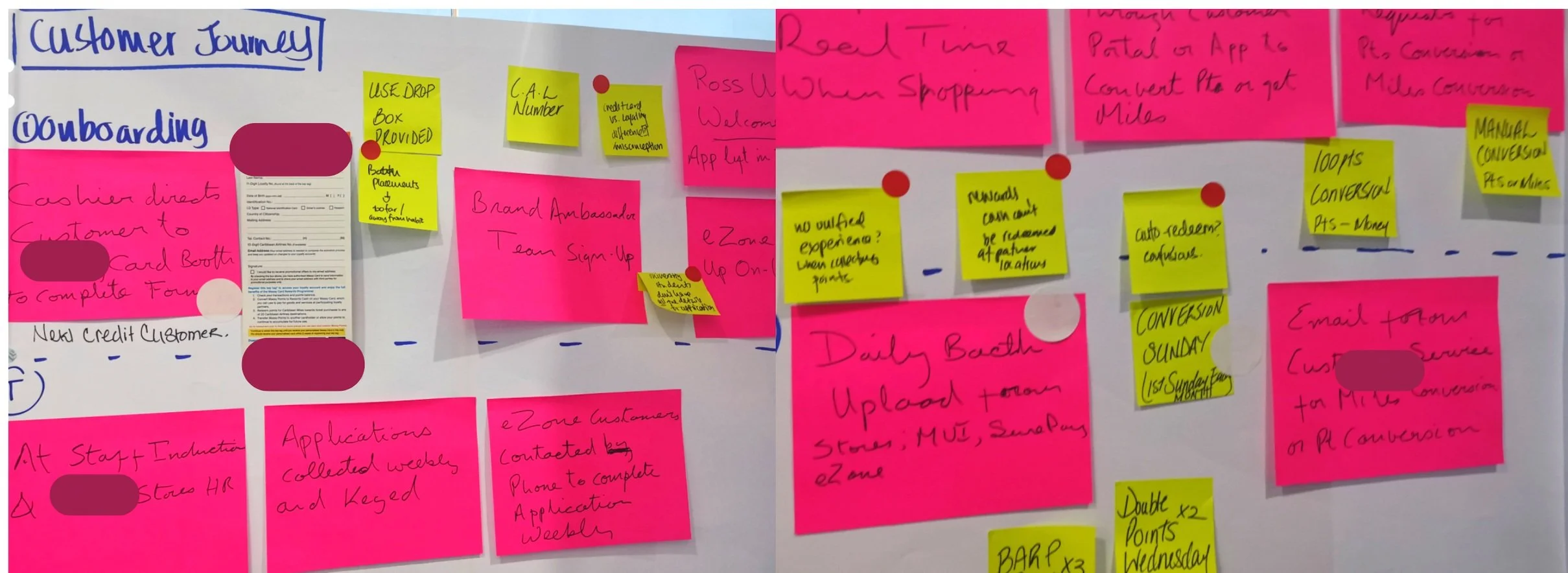
Then I organized these insights into a user journey map to reflect the current customer experience and the internal loyalty system at play. Dedicating this time to map out and analyze existing research allowed me to understand what we knew vs didn’t know: which led to more refined research questions and a more intentional fieldwork plan. I realized that besides understanding customer experiences it was essential to also hear from internal teams who managed various parts of the loyalty process.
Primary research: Since we had the opportunity to conduct fieldwork in Barbados, I wore my anthropologist hat to design a field study that allowed us to really observe customer behaviors and pain points as they experienced the loyalty program. My research toolbox looked like this:
Ethnographic research
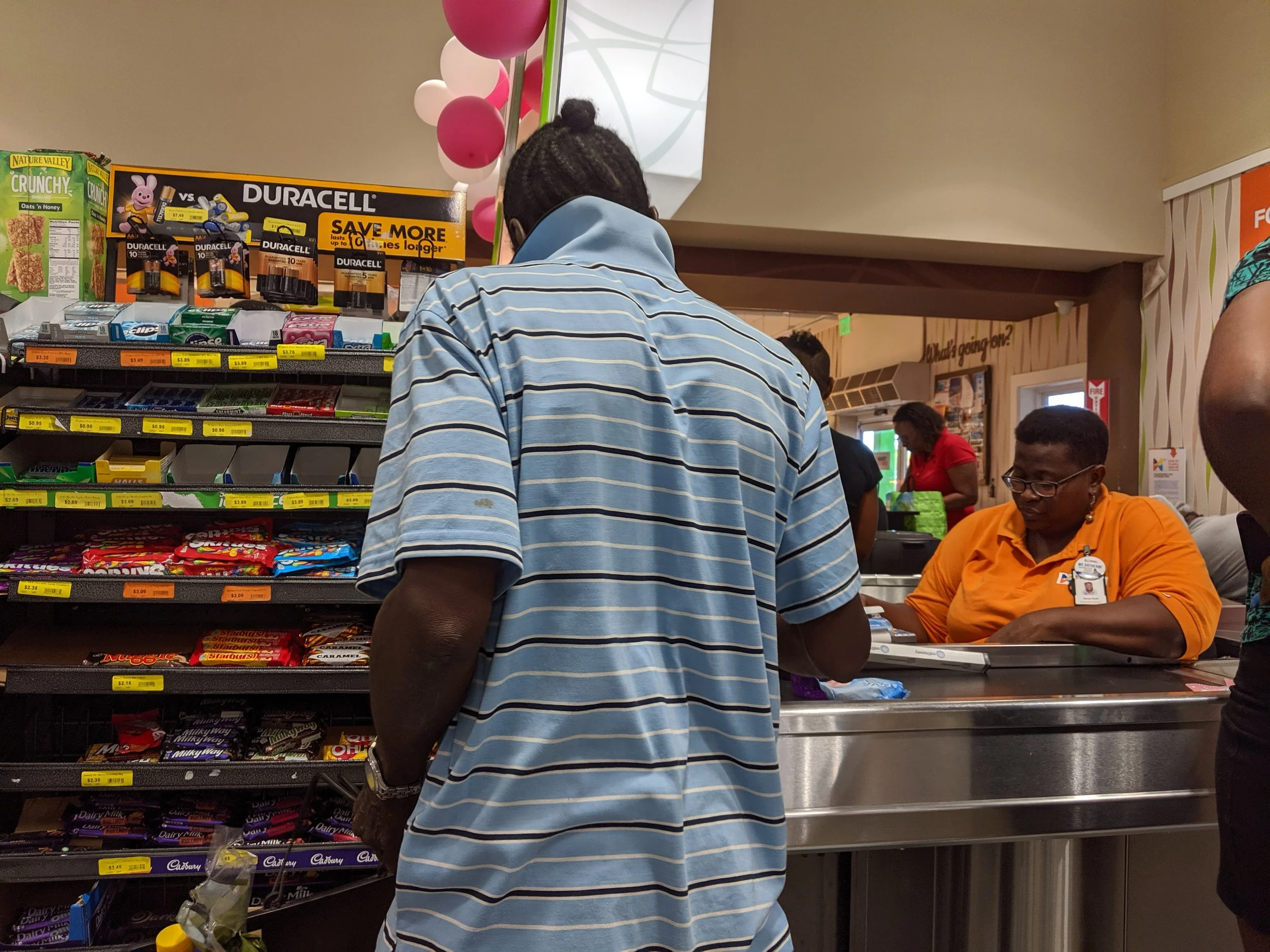
The fieldwork spanned 8 days and started off with a series of participant observation sessions spread across 4 M*supermarkets. Here we observed how customers experienced the supermarket, the check-out process, what earning and redeeming of loyalty points looked like and in some cases, we got the opportunity to see customers signing up for a new loyalty card.
I had a team of four to assist me during the field study. Since they had not taken part in a user research project before, I conducted a series of knowledge transfer sessions to take them through the basics of interviewing, participant observation, and fieldwork ethics.
40 Tag-Along Interviews
These allowed us to clarify and dig deeper into the various behaviors and interactions that we observed in customers. Since most customers were rushed, we either interviewed them while they stood in the check-out line or as we bagged their groceries at the counter (I am now a well-trained grocery bagger!)
I prepared an observation and interview guide for my team so that they knew the kind of behaviors to look out for and the key questions to cover.
Customer Interviews
We scheduled 5 structured interviews with a cross-section of customers to further validate the customer behaviors and pain points that surfaced during the participant observation sessions. I collaborated with the sales team to recruit participants that represented M’s current customer archetypes. During the interviews that lasted about 45 minutes, we also conducted a think-aloud where customers went through the current loyalty web experience.
Internal Team Interviews
Our conversations at the supermarkets revealed that each store had a loyalty representative who was in charge of signing up new customers and handling all customer queries and complaints. I scheduled interviews with 2 loyalty representatives and 3 team members who worked on the back-end. These conversations allowed us created a more detailed process map outlining the different departments, individuals, and procedures that were at play and pinpoint points of friction.
Synthesis
Given the tight timeline in Barbados and with new information flooding in every day, I had to build a very structured synthesis process for the team. These two processes helped us stay on track:
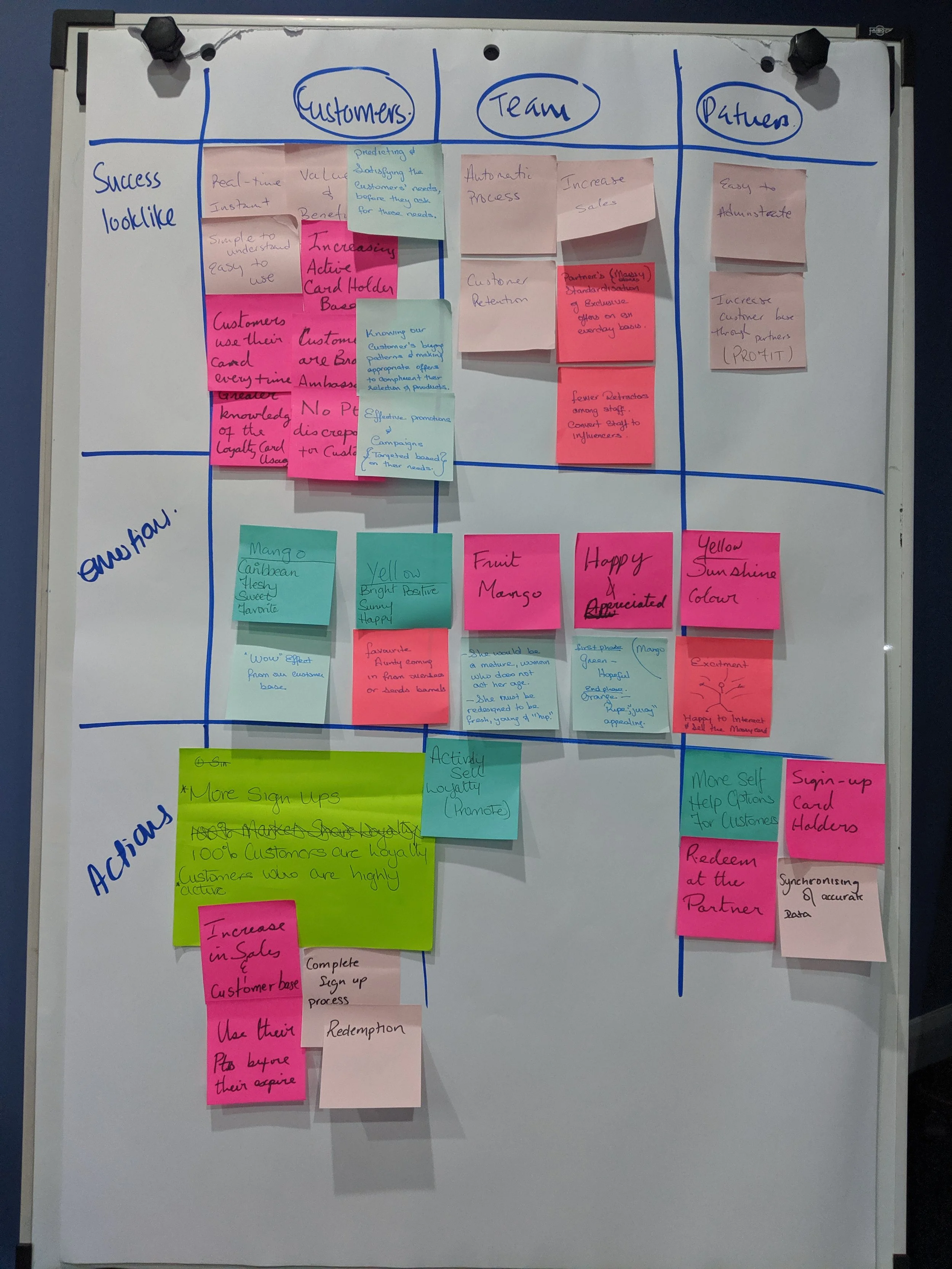
Mural Space and Google Drive: I created a mural space to organize all our documentation and collate our research findings. We recorded each interview and instantly labeled and uploaded it onto the drive. Having a clearly labeled folder structure helped us organize photos and recordings by each location/customer.
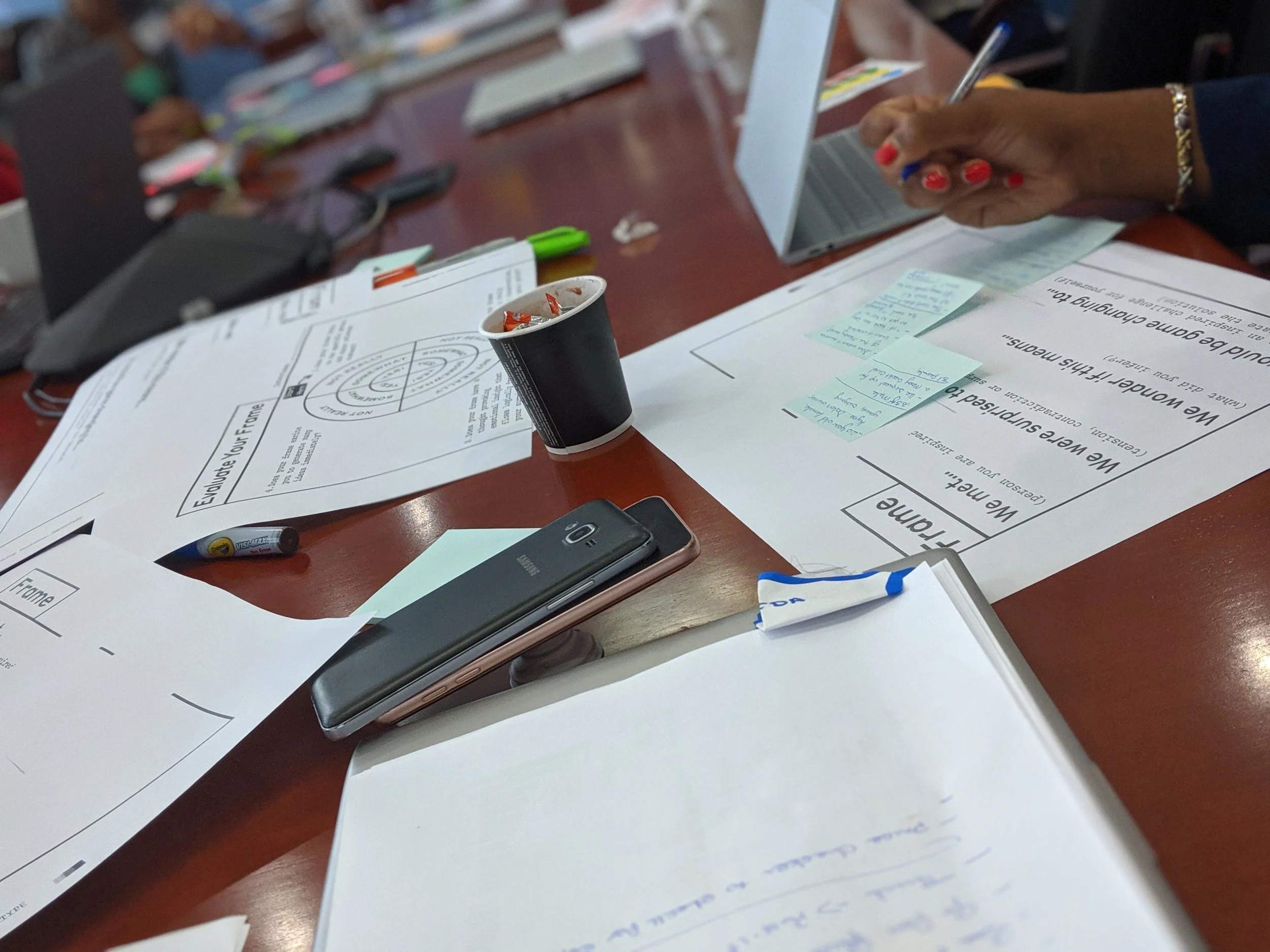
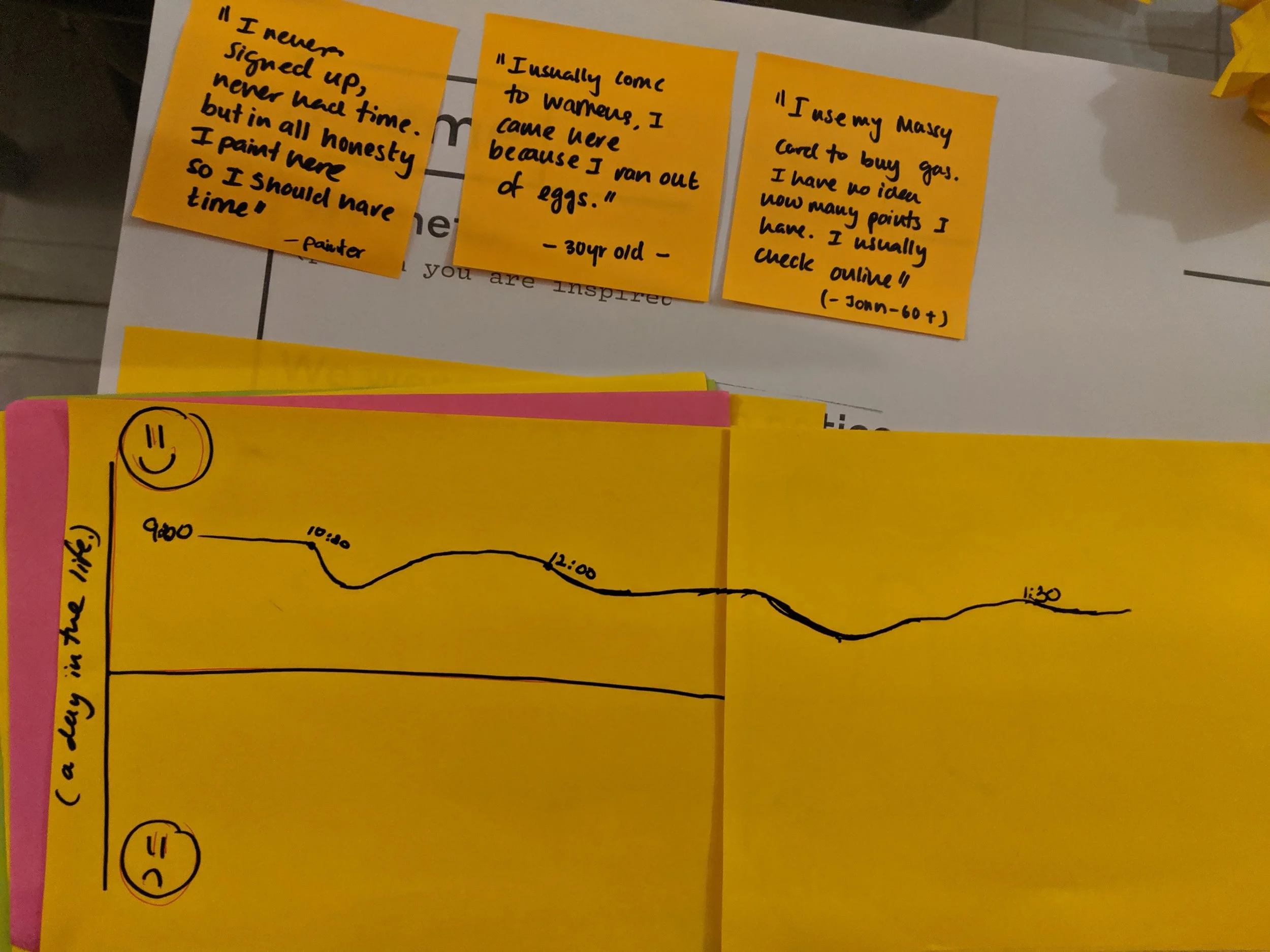
2. Daily synthesis huddle: Every day after our fieldwork session, we would have a huddle to listen to all the recordings from the day and collate key observations into research frames. These daily meetings turned out to be extremely useful since our memory was fresh at the end of the day and it gave us the chance to debrief and break down what would have otherwise been a massive information overload, into manageable chunks
What we learned
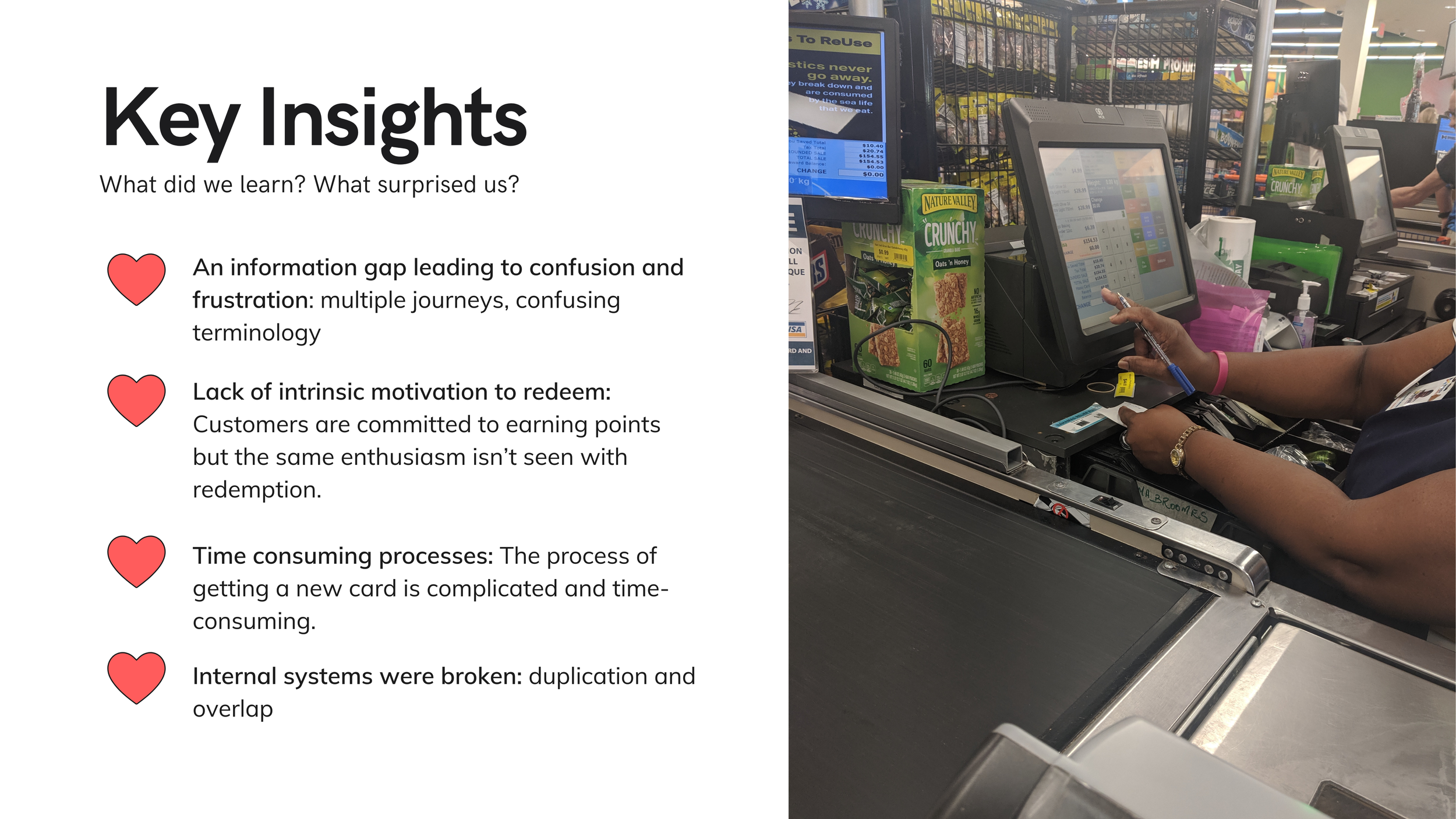
While we were able to surface gaps across the customer journey and find opportunities to optimize internal processes, these were our 4 key learnings. What stood out for me was the different mental models customers had around collecting loyalty points versus redeeming them. Customers generally found the process of collecting points to be more rewarding and joyful since their point balance increased yet, didn’t feel this same sense of satisfaction when redeeming points (even though this is where the real monetary value was) This plus the information gap around deadlines and conversion rates meant they just deprioritized redeeming which ultimately led them to miss the deadline and have a large number of expired points.
Design Thinking session and shareout
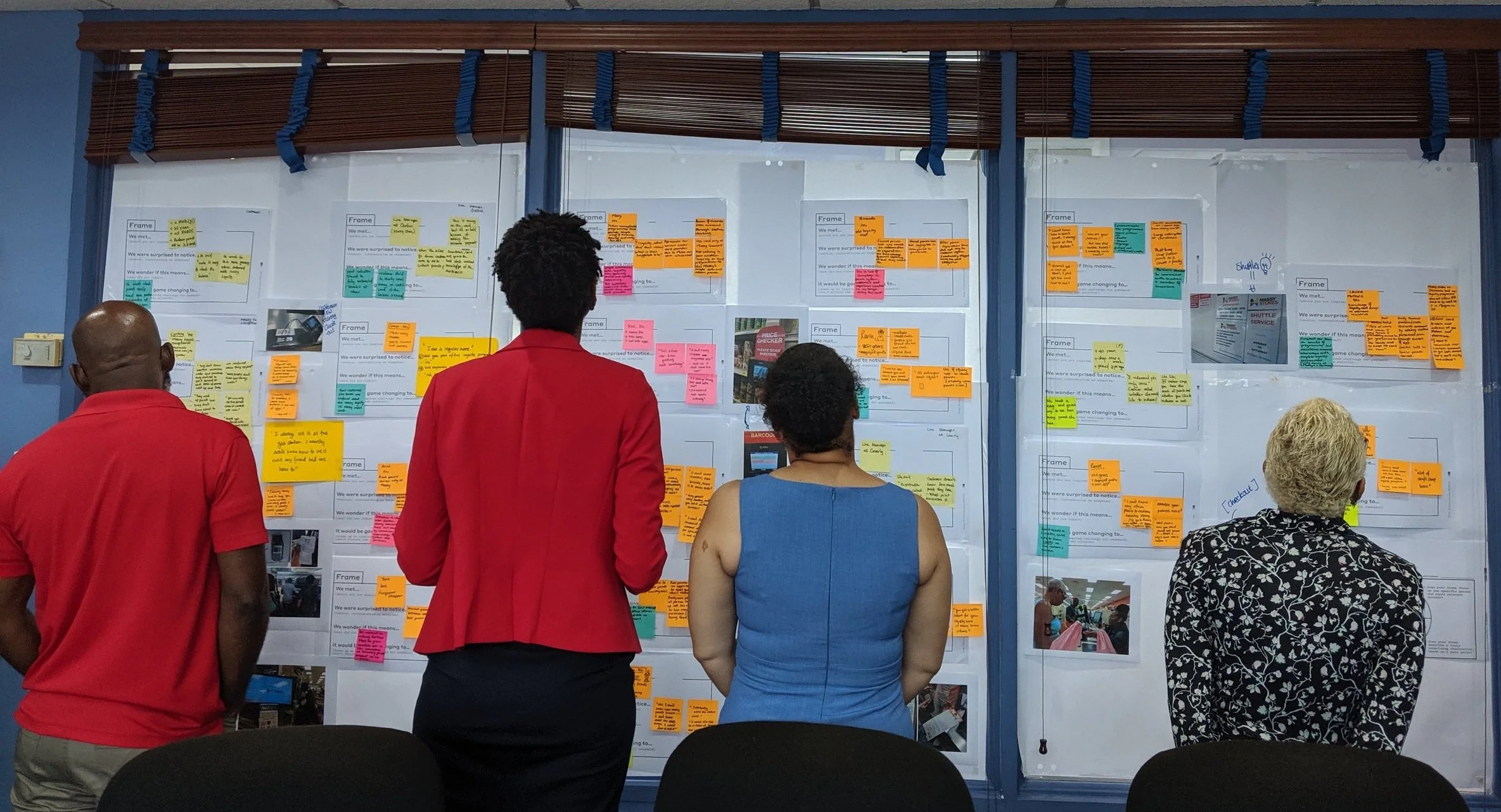
The field study ended with a 3-day design thinking and co-creation session for M’s senior leadership and loyalty team. We had teams flying in from 4 different countries so the stakes were high. I had two main aims for this session a) give an opportunity for the M team to immerse themselves in the lives of their customers through our research findings and hopefully make it a practice to bag groceries at their stores once a month! b) to co-create a revamped customer journey.
3. Co-creating a new customer journey: after the gallery walk and design frames the team spilt into three and came up with their own revamped customer journey taking into account current points of friction, confusion, and dissatisfaction.
There were three things that we did, that proved to be extremely useful in helping us convert the research insights into actionable product changes:
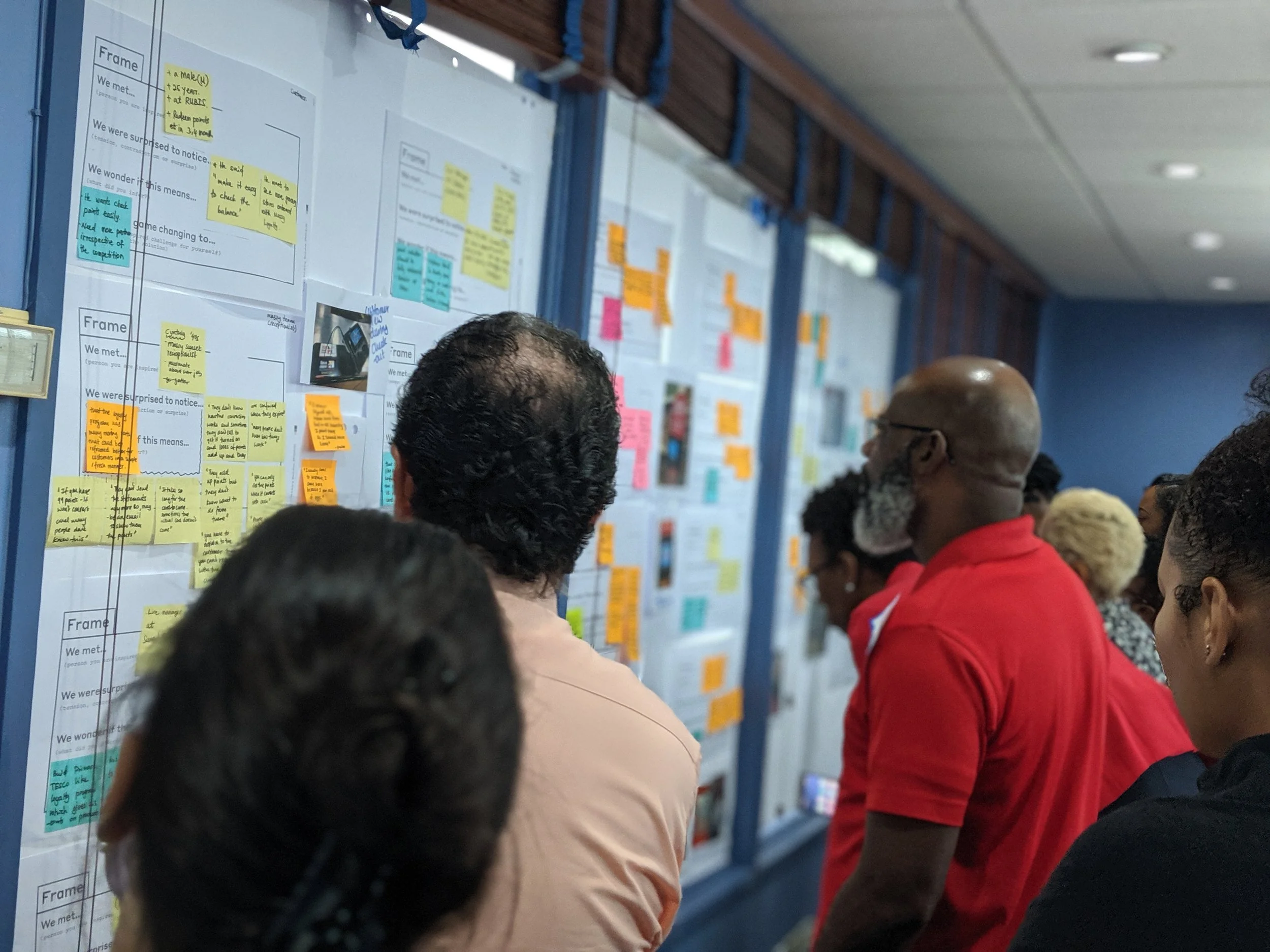
1. Gallery walk: We took over a wall in the board room and created a gallery walk consisting of all the photographs and research frames that summarized our key observations and findings from the fieldwork. This allowed the M team to absorb what we had seen and heard from users and to collectively glean insights.
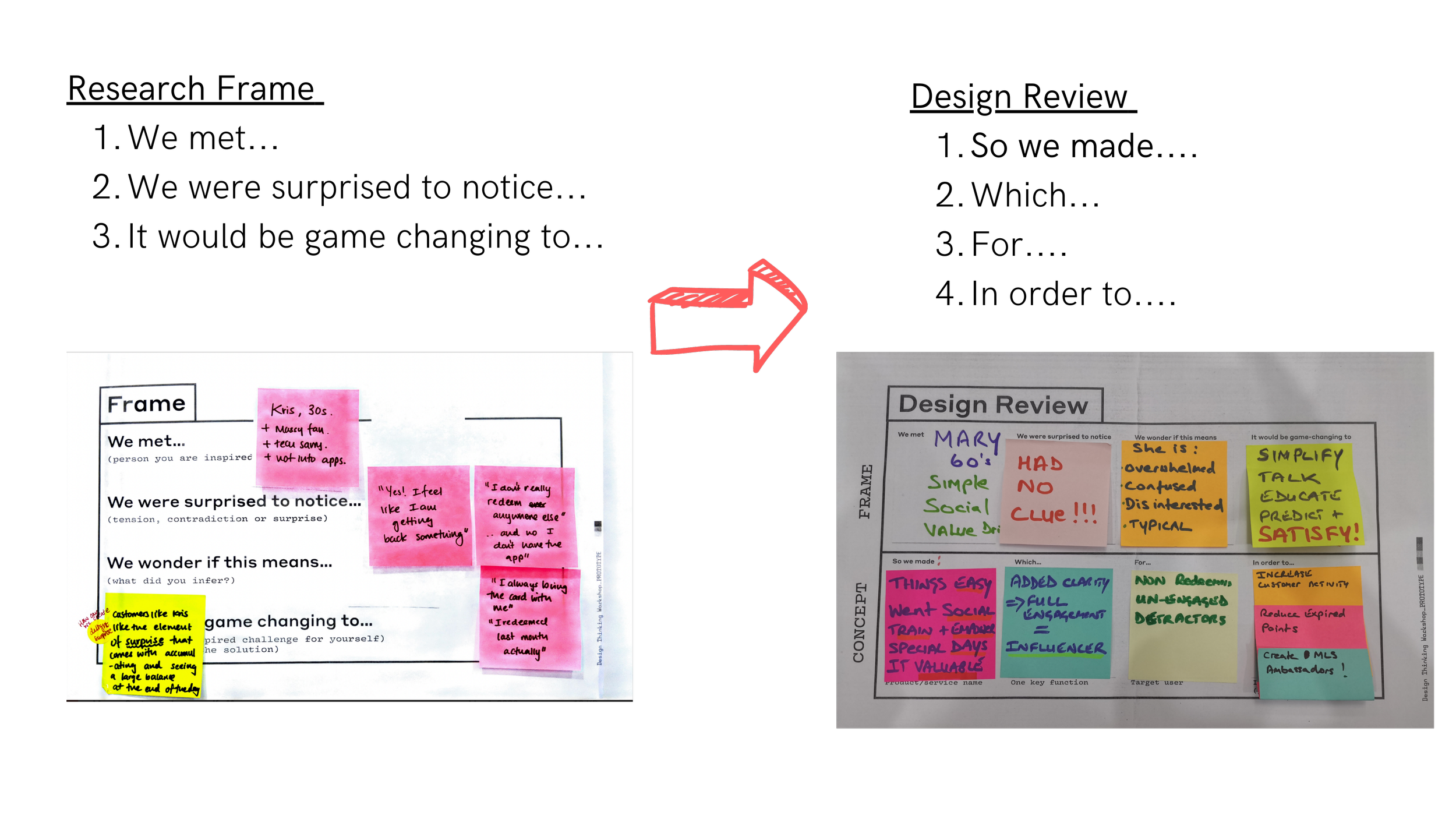
2. Design Frames: We used a tool called a design frame that helped participants select critical customer pain points and behaviors and convert them into a product change.
Impact
Besides planning and executing the company’s first UX Research project and design thinking session, these were our 4 major wins in converting the research findings into actionable product changes:
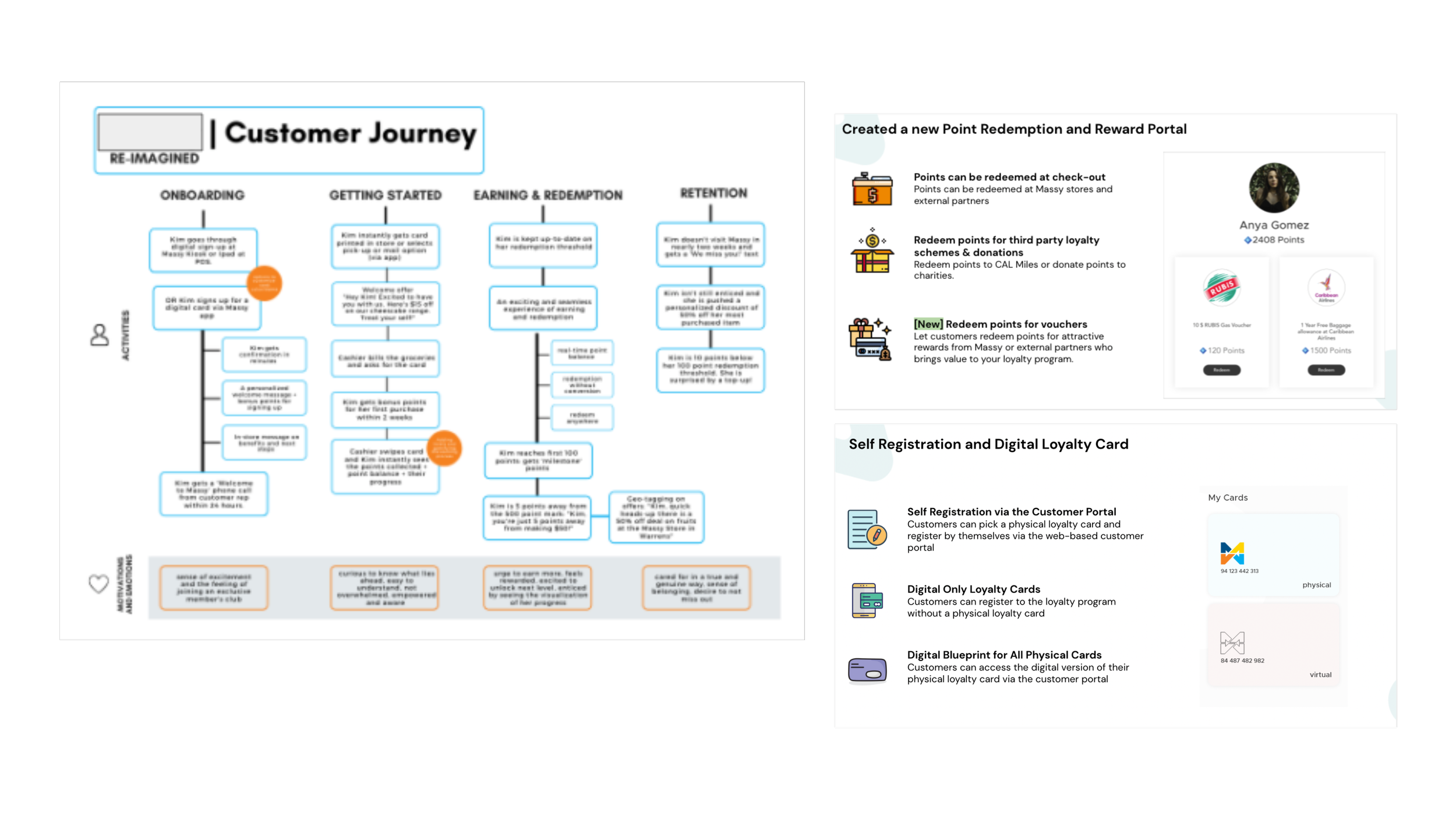
Designing a revamped customer journey to address the user pain points, information gaps, and process inefficiencies that the user research revealed.
Building 5 new behavioral archetypes for M to guide their future product and marketing strategy based on the 60+ customers interviewed.
A new loyalty mobile application for users and an improved management system for internal teams. I was able to collaborate closely with the UI designers to develop a new set of user flows, wireframes, and UIs.
Having our UX research project and strategy, showcased as a best practice at the AMCHAM - Tech Hub Islands Summit.